

Why Invest in Short-Term Rentals for Luxury Estates

Updated: Feb 1

For many North American luxury property owners, making your home available for short-term rentals means more than just extra income. The demand for exclusive, high-end stays is fueled by travelers seeking privacy, comfort, and memorable experiences that traditional hotels cannot match. By mastering premium guest experience and understanding the unique advantages of luxury short-term rentals, owners can unlock the full potential of their estates while delivering exceptional value to sophisticated guests.
Table of Contents
Key Takeaways
Point | Details |
Luxury Short-Term Rentals | These properties offer unique and personalized experiences, differentiating themselves from traditional hotels with premium amenities and exceptional service. |
Investment Models | There are three primary investment models: Individual, Professional Host, and Institutional, each with distinct management styles and revenue potential. |
Revenue Optimization | Utilizing dynamic pricing, personalized experiences, and strategic marketing can significantly enhance income from luxury short-term rentals. |
Compliance Importance | Understanding and adhering to local regulations, tax implications, and safety standards is critical for the successful operation of short-term rentals. |
Short-term rentals defined for luxury homes
Short-term rentals (STRs) represent a dynamic real estate investment strategy designed specifically for luxurious properties targeting transient, high-end travelers. Short-term rental accommodations are essentially furnished estates offered for brief durations, providing exclusive experiences beyond traditional hospitality models.
Unlike conventional long-term leasing, luxury short-term rentals cater to affluent travelers seeking unique, personalized stays. These properties typically feature:
Premium amenities
High-end furnishings
Exceptional location
Personalized guest experiences
Professional property management
The definition of short-term rentals extends beyond simple accommodation, encompassing a comprehensive hospitality experience. Luxury short-term rentals distinguish themselves through meticulous attention to guest comfort, offering spaces that feel more like exclusive private residences than standard hotel rooms.
Defining Characteristics
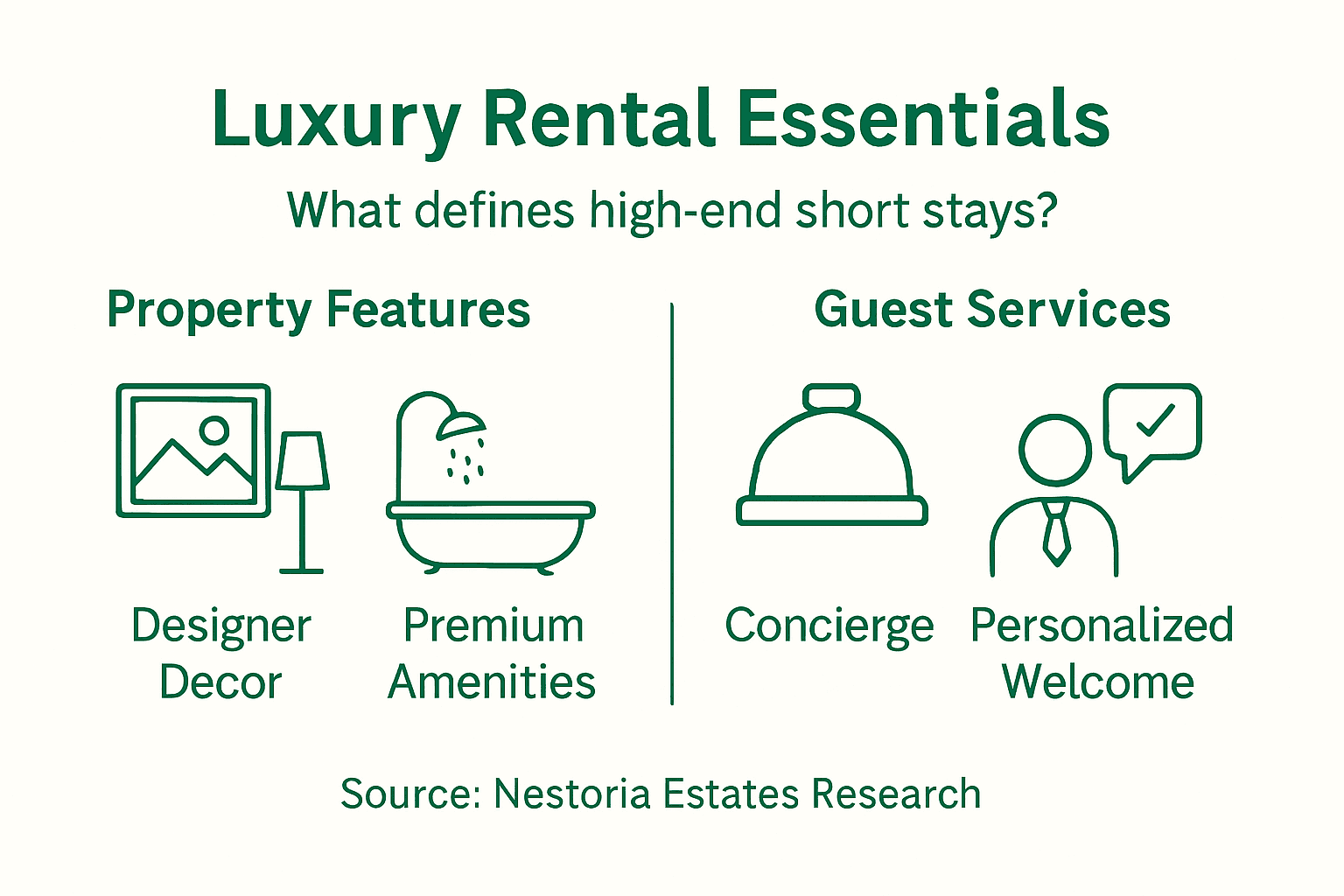
According to European research, short-term rentals are defined as repeated temporary lettings of furnished spaces759356_EN.pdf) to transient guests, typically for periods shorter than one month. For luxury estates, this translates to high-end properties designed to provide extraordinary experiences.
Pro tip: Research local zoning regulations and homeowner association rules before converting your luxury property into a short-term rental to ensure full compliance and maximize potential returns.
Types of short-term rental investment models
Short-term rental investment encompasses diverse strategies for luxury property owners seeking to generate income through temporary accommodations. Short-term rental investment models fundamentally vary across three primary approaches, each with unique operational characteristics and financial implications.
Investment Model Categories:
Individual/Peer-to-Peer Model
Occasional rentals by primary homeowners
Lower operational complexity
Flexible personal usage
Limited professional management
Professional Host Model
Multiple property management
Dedicated short-term rental business
Systematic operational approach
Advanced revenue optimization strategies
Institutional Investment Model
Large-scale property portfolio acquisition
Strategic market positioning
Professional asset management
High-volume rental approach
Each investment model presents distinct advantages and challenges. Institutional investors increasingly view short-term rentals759356_EN.pdf) as a sophisticated asset class with potential for significant returns when managed strategically.
Here is a comparison of short-term rental investment models for luxury properties:
Model Type | Ownership Scale | Management Style | Revenue Potential |
Individual | Single property | Owner-managed | Moderate, seasonal |
Professional Host | Several properties | Dedicated operations | Higher, optimized |
Institutional | Large portfolio | Asset management firm | Significant, scalable |
Operational Considerations
Successful short-term rental investments require understanding local market dynamics, regulatory environments, and guest experience expectations. Luxury estate owners must evaluate their personal investment goals, time availability, and willingness to engage in active property management.

Pro tip: Conduct thorough market research and consult with professional property management experts to determine the most suitable short-term rental investment model for your specific luxury estate.
Revenue potential and demand for premium stays
Luxury short-term rentals represent a lucrative investment opportunity with substantial revenue potential for property owners. Short-term rental revenue strategies demonstrate remarkable profitability through sophisticated pricing and guest experience optimization.
Premium Stay Revenue Drivers:
Higher average daily rates
Extended booking durations
Affluent traveler demographic
Personalized accommodation experiences
Competitive pricing strategies
The luxury short-term rental market distinguishes itself through unique value propositions that traditional hospitality models cannot replicate. Affluent travelers increasingly seek exclusive, private experiences that offer more than standard hotel accommodations.
Revenue Optimization Strategies
Successful luxury rental owners leverage multiple revenue enhancement techniques:
Dynamic pricing algorithms
Seasonal rate adjustments
Premium amenity offerings
Enhanced guest experience packages
Strategic marketing targeting
These approaches enable property owners to maximize income while meeting the sophisticated expectations of high-end travelers. Luxury short-term rental demand continues to grow as travelers prioritize unique, authentic experiences over conventional lodging options.
Pro tip: Invest in professional photography, curate unique local experiences, and develop a compelling property narrative to differentiate your luxury rental and command premium pricing.
Legal regulations and compliance essentials
Navigating the complex landscape of short-term rental regulations requires careful attention to local, state, and potentially federal guidelines. Short-term rental regulatory frameworks759356_EN.pdf) vary significantly across different jurisdictions, demanding a nuanced approach to legal compliance.
Key Compliance Requirements:
Host registration processes
Accurate tax reporting
Local zoning restrictions
Safety and occupancy standards
Insurance documentation
Licensing requirements
Regulatory Categorization
Legal frameworks for short-term rentals typically distinguish between different types of hosts:
Occasional personal property rentals
Professional multi-property operators
Institutional investment rental platforms
Each category faces unique regulatory obligations designed to protect consumer rights, maintain housing market stability, and ensure fair competition among different lodging providers.
Compliance Strategy
Successful luxury short-term rental owners must proactively manage legal requirements by:
Researching local ordinances
Maintaining comprehensive documentation
Regularly updating licensing
Implementing safety protocols
Engaging with local regulatory bodies
Pro tip: Consult with a local real estate attorney specializing in short-term rental regulations to develop a comprehensive compliance strategy tailored to your specific property and location.
Financial risks, management, and tax impacts
Investing in luxury short-term rentals requires sophisticated financial planning and comprehensive risk management strategies. Short-term rental financial risks759356_EN.pdf) encompass multiple complex dimensions that demand proactive and strategic approaches.
Key Financial Risk Categories:
Market volatility
Regulatory uncertainty
Operational expenses
Income fluctuations
Maintenance costs
Tax complexity
Tax Classification Strategies
Short-term rental tax treatment depends on critical factors that significantly impact financial outcomes:
Rental duration parameters
Service level provided
Owner’s level of involvement
Property usage classification
Local tax jurisdiction rules
Successful luxury short-term rental investors must develop comprehensive financial management approaches that anticipate potential market shifts, optimize tax positioning, and maintain flexible operational strategies.
This summary highlights key financial risk factors and their possible impacts for luxury short-term rental owners:
Financial Risk Factor | Potential Impact | Mitigation Strategy |
Market Volatility | Unpredictable revenue | Dynamic pricing, market research |
Regulatory Changes | Increased costs, restrictions | Proactive legal compliance |
Tax Complexity | Penalties, missed deductions | Professional tax advice |
Maintenance Costs | Reduced profitability | Regular upkeep, reserves |
Financial Management Considerations
Professional management of short-term rental investments requires:
Detailed financial record-keeping
Regular performance analysis
Dynamic pricing strategies
Robust emergency financial reserves
Professional tax and accounting consultation
Pro tip: Develop a comprehensive financial model that includes conservative revenue projections, maintains at least six months of operating expenses in reserve, and incorporates professional tax planning strategies.
Unlock the Full Potential of Your Luxury Short-Term Rental Investment
Navigating the complexities of luxury short-term rentals means facing challenges like regulatory compliance, dynamic pricing, and delivering exceptional guest experiences. Whether you are managing your estate personally or exploring a professional host model, the goal is clear: maximize revenue while creating memorable stays that attract affluent travelers. At Nestoria Estates, we understand these pain points and offer tailored solutions that connect property owners with discerning guests seeking premium accommodations and exclusive experiences.
Through our comprehensive platform, you gain access to expert property management, sophisticated marketing strategies, and curated experience packages such as private chefs and bespoke city tours. These services are designed to enhance your property’s appeal and optimize income potential. Discover how easy it is to elevate your luxury rental into a thriving business by visiting Nestoria Estates. Experience firsthand the advantages of effective management and personalized guest offerings.
Are you ready to transform your luxury estate into a highly profitable short-term rental?

Explore our innovative property listing and management tools now at Nestoria Estates. Start maximizing your investment with our expert support and curated travel experiences today. Learn more on our main platform and begin your journey toward exceptional returns.
Frequently Asked Questions
What are short-term rentals for luxury estates?
Short-term rentals for luxury estates are furnished properties rented out for brief periods, targeting affluent travelers seeking unique and personalized experiences that offer more than traditional hotel accommodations.
What investment models are available for luxury short-term rentals?
There are three primary investment models for luxury short-term rentals: Individual/Peer-to-Peer Model, Professional Host Model, and Institutional Investment Model. Each has different ownership scales, management styles, and revenue potential.
What are the revenue potential and demand for luxury short-term rentals?
The revenue potential for luxury short-term rentals is significant, driven by higher average daily rates, longer booking durations, and an affluent traveler demographic seeking exclusive experiences unavailable in standard hotels.
What legal regulations should be considered for short-term rentals?
Key legal regulations for short-term rentals include host registration, tax reporting, local zoning restrictions, safety standards, and licensing requirements. Compliance is crucial to avoid penalties and ensure a successful rental operation.
Recommended
Comments