

Vacation Rental Trends 2026: What Canadian Owners Must Know

TL;DR:
In 2026, regulatory compliance, market maturity, and traveler selectivity shape the vacation rental industry. Well-managed, compliant properties in resort zones outperform urban listings, with professional management and data-driven pricing boosting profitability. Vancouver owners must prioritize licensing, documentation, and adapting to shifting traveler preferences to succeed in the evolving market.
The trends in vacation rentals 2026 are defined by three forces: tighter regulation, market maturity, and a more selective traveler. Canada’s short-term rental (STR) market has moved past its speculative phase. Property owners who treat compliance as optional now face denied tax deductions, fines, and shrinking occupancy. The owners who thrive are those who treat their rental like a business, not a side project.

What are the top trends in vacation rentals for 2026?
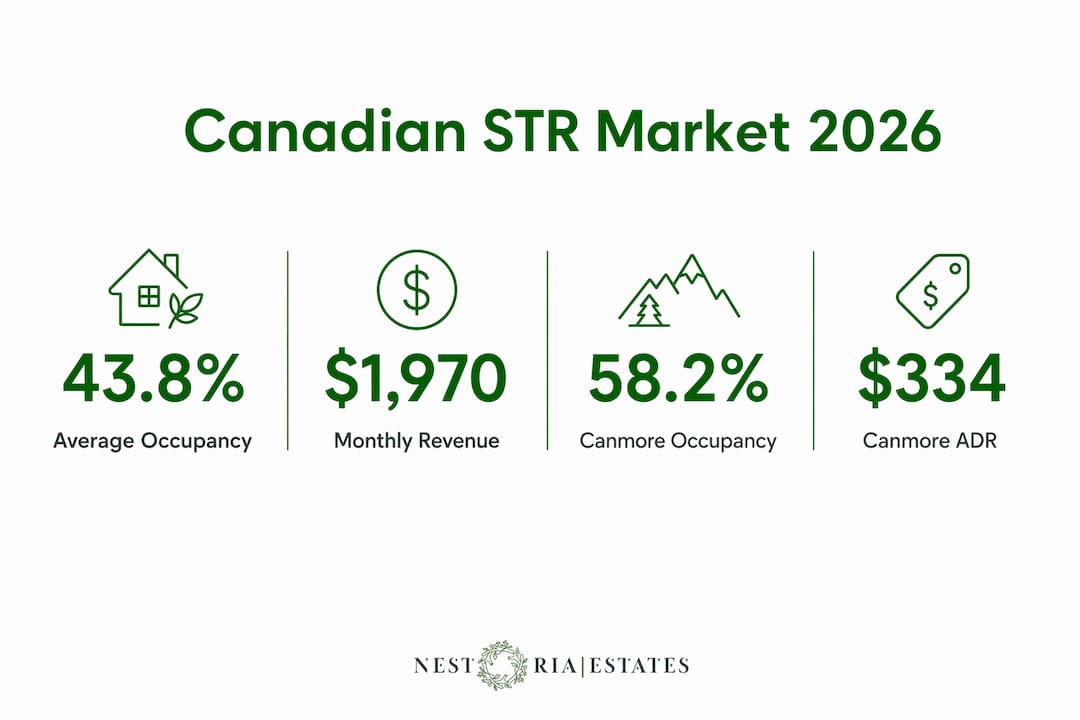
The Canadian STR market averaged 43.8% occupancy and $1,970 monthly revenue in mid-2026. That national average masks a wide spread. Premium resort markets like Canmore reached 59.9% occupancy and $5,970 monthly revenue, while urban properties in tightly regulated cities struggled to stay viable.
The defining shift in 2026 is that regulatory compliance has become the baseline for profitability. Cities like Vancouver now enforce principal residence requirements and municipal licensing rules with real financial consequences. Owners who ignore these rules lose access to tax deductions under Canada’s Income Tax Act, which directly cuts into net returns.
Three forces are reshaping the market this year:
Regulatory maturity. Provinces like British Columbia enforce licensing for rentals shorter than 90 days. Non-compliant properties face both fines and tax penalties.
Traveler selectivity. Guests in 2026 expect hotel-quality cleanliness, fast communication, and authentic local experiences. Properties that fall short lose ranking on booking platforms.
Data-driven pricing. Static pricing no longer works. Markets shift week to week, and owners using dynamic pricing tools consistently outperform those who set rates manually.
For Vancouver Airbnb owners, these trends are not abstract. They determine whether a property generates income or generates liability.
Which Canadian markets offer the best STR opportunities in 2026?
Location is the single biggest driver of STR performance in 2026. The best-performing Canadian markets share three traits: strong tourism demand, limited housing supply, and a regulatory environment that permits STR operation.
Market | Occupancy Rate | ADR | Monthly Revenue |
Canmore, AB | 58.2% | $334 | $5,661 |
Whistler, BC | High seasonal | Premium | Top-tier |
Muskoka Lakes, ON | Strong summer | Mid-high | Seasonal peak |
Toronto, ON | Moderate | $200+ | Regulated |
Vancouver, BC | Restricted | Variable | Compliance-dependent |
Canmore and Whistler sit in resort municipalities, which are classified as regulatory exemption zones. These zones permit STR operation outside the principal residence requirement that applies to most urban properties. That legal clarity is worth paying for. Exemption zone properties carry a 15–20% price premium over comparable urban listings, but they deliver consistent, legally protected income.
Vancouver operates under a stricter framework. The city limits STRs to a host’s principal residence, which rules out most investor-owned condos and second properties. Owners in Vancouver must either operate within those rules or accept that their property is not viable as a short-term rental.
Pro Tip: Before buying any STR property in Canada, confirm the zoning classification with the local municipality. A property in a resort zone and a property two blocks outside it can have completely different legal and financial profiles.
How are 2026 regulations affecting Vancouver STR owners?
Regulatory enforcement in 2026 is not a future risk. It is a present reality. Since 2024, non-compliance with provincial or municipal STR licensing leads to the denial of related tax deductions under Canada’s Income Tax Act. Section 67.7(2) of the Act specifically targets non-compliant landlords, removing their ability to deduct operating expenses against rental income.
For a Vancouver owner earning $40,000 per year from a short-term rental, losing those deductions can mean paying tax on gross revenue rather than net profit. The financial impact is significant and immediate.
Key compliance requirements for Vancouver STR owners include:
Principal residence rule. The property must be your primary home. Investment properties and secondary suites in most Vancouver neighborhoods do not qualify.
Business license. Vancouver requires a valid STR business license, renewed annually. Operating without one triggers fines and potential listing removal.
Platform registration. Booking platforms operating in British Columbia are required to verify host licenses. Unlicensed listings face removal.
90-day rule. British Columbia’s provincial framework targets rentals shorter than 90 days in non-exempt zones, with enforcement escalating through 2026.
The practical implication for Vancouver owners is clear. Compliance is not a bureaucratic checkbox. It is the foundation of a financially viable rental. For a detailed breakdown of current Vancouver rules, the short-term rental regulations in Vancouver page at Nestoriaestates covers the 2026 updates in full.
Pro Tip: Keep a compliance file with your business license, renewal dates, and any municipal correspondence. Audits happen, and organized documentation protects your deductions.
What traveler behaviors are shaping vacation rental demand in 2026?
Traveler behavior in 2026 has shifted in ways that directly affect how you market and price your property. 77% of Canadian summer leisure travelers stay within Canada. U.S. travel fell 14% year over year in Q1 2026 for Canadians, driven by cost and currency concerns. That domestic travel strength benefits well-positioned Canadian STR owners.
The guests booking your property in 2026 are more deliberate than they were three years ago. Canadian travelers prioritize clear costs, flexible cancellation, and unique local experiences over luxury for its own sake. A property that delivers a genuine neighborhood feel, local restaurant guides, and transparent pricing outperforms a generic listing with higher-end finishes but no personality.
Gen Z travelers, now a significant booking demographic, favor shorter international trips and experience-driven stays. They book based on photos, reviews, and authenticity signals. A 4.9-star rating with 200 reviews carries more weight than a renovated kitchen. For choosing the right vacation property as a guest or owner, the experience layer matters as much as the physical space.
Remote workers are extending the shoulder season. Guests who work from anywhere book longer stays in march, april, october, and november, months that used to be dead periods for many STR owners. Properties with reliable high-speed internet, a dedicated workspace, and flexible check-in now attract a guest segment that books 7 to 21 nights at a time.
What strategies should Vancouver property owners adopt in 2026?
The owners generating the strongest returns in 2026 follow a clear playbook. Turnkey properties are the preferred investment vehicle. They avoid renovation costs, meet guest quality expectations immediately, and generate income faster. In a market where carrying costs are high and regulatory risk is real, a property that needs six months of work before its first booking is a liability.
Here is the approach that works in 2026’s STR environment:
Buy in compliant zones. Target resort municipalities or properties that qualify under principal residence rules. Regulatory clarity protects your income and your tax position.
Price dynamically. Use market-based pricing tools that adjust rates based on local demand, events, and competitor availability. Static pricing leaves money on the table during peak periods and causes vacancies during slow ones.
Target shoulder-season guests. Year-round revenue optimization now depends on shoulder-season bookings from remote workers and extended-stay travelers. Market your property’s workspace and flexibility explicitly.
Invest in professional management. Owners without professional management face higher compliance risks and lower occupancy rates. A 4.9-star rating requires consistent cleaning, fast communication, and proactive maintenance. That is difficult to sustain without a dedicated team.
Model your financials with regulatory risk included. Factor in the cost of compliance, licensing fees, and the tax impact of non-deductible expenses before committing to a property.
For a deeper look at how professional STR management changes investment outcomes, Nestoriaestates has published a full analysis of the 2026 management landscape.
Pro Tip: Run two financial models for any STR investment: one assuming full compliance costs, and one assuming non-compliance with denied deductions. The gap between those two numbers tells you exactly how much regulatory risk you are carrying.
Key Takeaways
The most effective approach to vacation rental success in 2026 is to treat compliance, professional management, and data-driven pricing as non-negotiable operating standards, not optional upgrades.
Point | Details |
Compliance is financial protection | Non-compliant STRs lose tax deductions under Canada’s Income Tax Act, cutting net returns significantly. |
Resort zones outperform urban markets | Canmore and Whistler deliver top occupancy and revenue; Vancouver requires strict principal residence compliance. |
Turnkey properties win | Investors favor move-in-ready properties that generate income immediately without renovation delays. |
Shoulder-season bookings matter | Remote workers extend demand into spring and fall; market workspace and flexible stays explicitly. |
Professional management drives occupancy | Owners with active professional management maintain higher ratings, better compliance, and stronger bookings. |
My take on Vancouver’s STR market in 2026
I have watched Vancouver’s STR market tighten steadily since 2022, and 2026 is the year that tightening becomes permanent. The owners who treated short-term rentals as a passive income hack are finding out that the math no longer works. Licensing fees, denied deductions, and platform enforcement have closed most of the gaps that made non-compliant operation profitable.
What I find genuinely interesting is the opportunity that creates for owners who do it right. When non-compliant listings disappear from the market, compliant ones capture their demand. A well-managed, licensed property in a Vancouver neighborhood with limited supply is in a stronger position today than it was two years ago, precisely because the competition has thinned.
The mistake I see most often is owners buying based on gross revenue projections without accounting for compliance costs. A property that generates $50,000 per year looks very different when you subtract licensing fees, professional management, and the tax impact of operating in a regulated environment. Model those costs first. The properties that survive that scrutiny are the ones worth owning.
The luxury rental trends for 2026 tell a similar story at the premium end of the market. Quality and compliance are the two variables that separate properties generating strong returns from those that are slowly bleeding cash.
— Kamran
Nestoriaestates: full-service management for Vancouver Airbnb owners
Vancouver’s 2026 STR market rewards owners who operate with precision. Licensing compliance, dynamic pricing, and guest experience management are full-time responsibilities that most property owners cannot handle alone.

Nestoriaestates specializes in Airbnb property management for Vancouver owners, covering everything from regulatory compliance and pricing optimization to guest communication and cleaning coordination. The team handles the operational side so you collect the income without managing the day-to-day. Owners receive transparent reporting, market-based pricing adjustments, and free revenue projections before committing. If you own a Vancouver property and want to know what it can realistically earn in 2026’s regulated market, Nestoriaestates gives you that answer backed by real data.
FAQ
What is the average occupancy rate for Canadian STRs in 2026?
The Canadian short-term rental market averaged 43.8% occupancy in mid-2026. Premium resort markets like Canmore reached 58.2% occupancy with an average daily rate of $334.
Can Vancouver property owners legally rent on Airbnb in 2026?
Yes, but only if the property is the host’s principal residence and the owner holds a valid Vancouver STR business license. Investment properties and secondary suites in most Vancouver neighborhoods do not qualify.
What happens if a Canadian STR owner does not comply with licensing rules?
Non-compliant owners face denial of STR-related tax deductions under section 67.7(2) of Canada’s Income Tax Act, meaning they pay tax on gross rental income rather than net profit.
Why are resort municipalities like Canmore and Whistler better for STR investment?
Resort municipalities are classified as regulatory exemption zones, permitting STR operation outside the principal residence requirement. That legal clarity supports consistent bookings and protects the owner’s tax position.
How do remote workers affect vacation rental demand in 2026?
Remote workers extend demand into shoulder seasons like march through may and september through november, booking stays of 7 to 21 nights. Properties with dedicated workspaces and fast internet attract this high-value guest segment.
Recommended
Comments