

What Is a Boutique Rental? A Clear Guide for 2026
- info67421305
- a few seconds ago
- 8 min read

What makes a boutique rental different from other rentals?
A boutique rental is a smaller-scale, individually styled accommodation that delivers a personalized guest experience, sitting somewhere between a standard vacation rental and a boutique hotel. The term “boutique” signals three things: distinctive design, intimate scale, and consistent professional service. Strip any one of those three and you have either a generic Airbnb listing or a small hotel.
The clearest way to understand the boutique rental definition is by contrast. A traditional vacation rental is often a spare bedroom or a plain furnished unit listed online. A boutique hotel typically runs 10–100 rooms with daily housekeeping and on-site staff. A boutique rental lands in between: it is a self-contained unit, often a loft, condo, or heritage apartment, that is designed with intention and managed to hotel-like standards without the full hotel infrastructure.
In the Canadian context, boutique rentals commonly appear as:
Restored heritage lofts in walkable urban neighborhoods
Design-forward condos with curated local art and custom furnishings
Short-term furnished suites operated under corporate housing models
Architecturally distinct units in smaller buildings with fewer than 20 suites
The typical guest is not looking for the cheapest bed in the city. They want a space that feels like it was put together for them, not assembled from a furniture catalog.
Core characteristics that define a boutique rental property
Boutique rentals share a recognizable set of traits, regardless of city or building type, as seen in distinctive examples like those found in Gulf Shores Alabama Vacation Rentals by Owner.
Scale and intimacy. Most boutique rental buildings contain far fewer units than standard apartment towers. That smaller footprint lets operators know their guests personally and respond to requests quickly, something a 300-unit building simply cannot replicate.
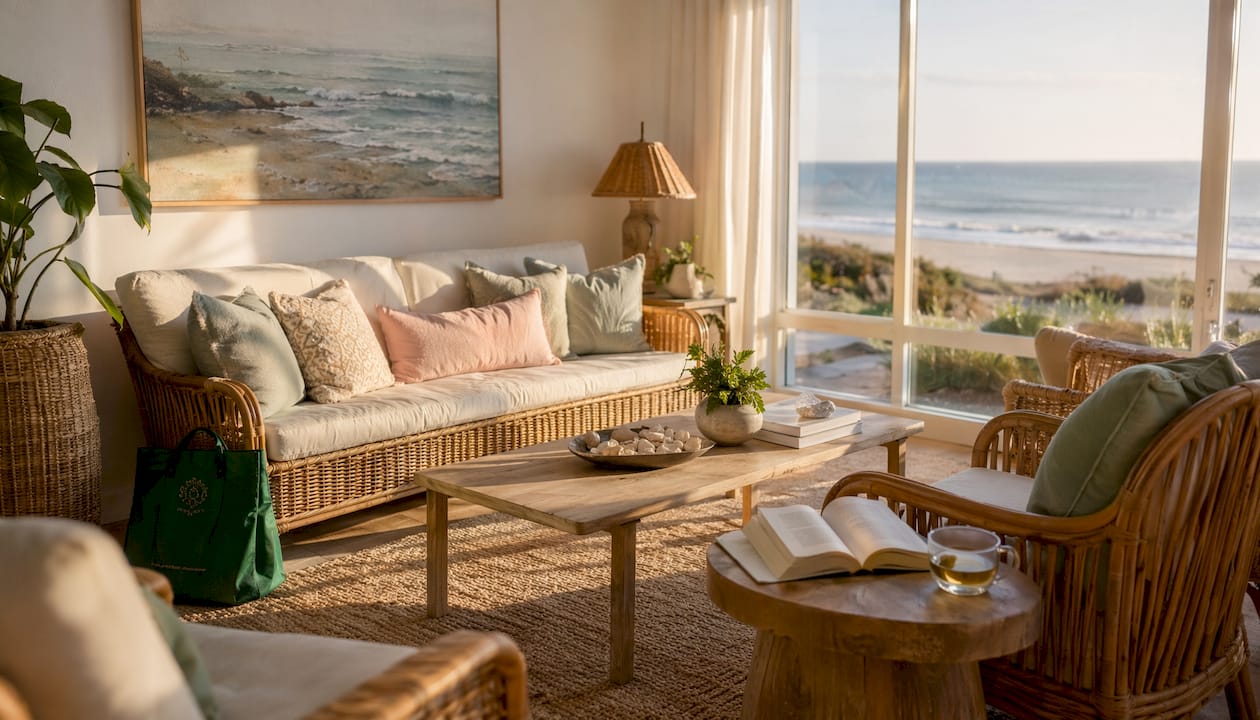
Design-led identity. Every design choice in a true boutique rental supports a coherent aesthetic. Locally sourced materials, curated art, custom furniture, and a clear visual theme are standard. The sense of place a well-designed unit creates is itself a marketing asset, driving repeat bookings and word-of-mouth.
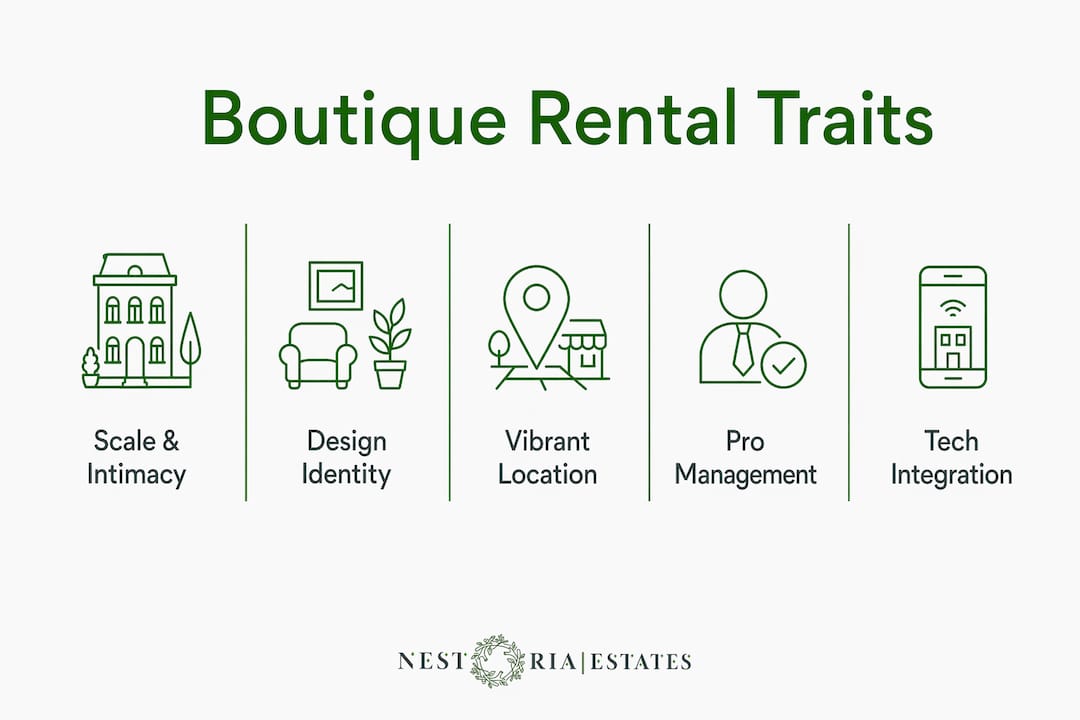
Walkable, vibrant locations. Boutique rentals tend to cluster in culturally rich neighborhoods: arts districts, historic downtowns, and trendy urban corridors. Location is not incidental; it is part of the product.
Professional operational standards. This is where boutique rentals separate from generic listings. Operational agility means consistent cleaning protocols, responsive guest communication, mobile check-in, and digital keys. Guests know exactly what they are getting before they arrive.

Technology integration. Digital keys, contactless check-in, and automated messaging are now baseline expectations in the boutique segment. They reduce friction for guests and reduce labor costs for operators.
Vancouver’s short-term rental market gives a useful benchmark: active listings across the city were booked between 65% and 78% of available nights at an average daily rate of $222 as of June 2026, with revenue up 12.4% year over year. Well-managed boutique properties in desirable neighborhoods routinely outperform that city-wide average.
Common misconceptions about boutique rentals
Several persistent myths cloud how people understand this category.
“Boutique just means stylish.” Style is necessary but not sufficient. A beautifully decorated unit with no cleaning standards, slow guest communication, and inconsistent amenities is not a boutique rental. It is a pretty listing with a branding problem. Treating a boutique rental like a simple spare room listing undermines both market positioning and guest experience.
“Boutique rentals are only luxury high-rises.” Scale does not determine boutique status. A 13-room motel or a restored heritage duplex can qualify. What matters is the combination of design intention, service consistency, and local identity, not the price per night or the building’s height.
“Any Airbnb with nice photos is boutique.” Generic short-term listings and boutique rentals are operationally different categories. A boutique rental runs as a hospitality business with standardized housekeeping, professional guest support, and a brand identity that holds across every stay.
“Boutique rentals are unregulated.” In most Canadian cities, boutique-style short-term rentals must comply with municipal licensing, zoning rules, and fire codes. In Vancouver specifically, short-term rentals often must be the owner’s principal residence under municipal bylaws, which is why many operators shift to corporate housing or longer-stay models to maintain compliance while preserving the boutique experience.
“The design is what guests pay for.” Guests pay for the combination of design and reliability. A space that looks great in photos but delivers inconsistently loses repeat bookings fast.
Advantages and disadvantages of boutique rentals
Pros:
Higher nightly rates. Professional management and brand identity contribute to occupancy stability and the ability to charge above-market rates. Guests pay more when the value is visible in the design, amenities, and photography.
Stronger guest loyalty. Boutique rentals attract travelers who prioritize consistent quality: remote workers, relocating professionals, and discerning leisure travelers. These guests rebook and leave detailed positive reviews.
Differentiation in a crowded market. A well-positioned boutique rental competes on story and experience, not just price, which is a more durable position in any market.
Appeal to specific high-value segments. Remote workers and relocating professionals actively seek boutique-style accommodations for extended stays because they value consistent quality over the variability of generic listings.
Cons:
Higher setup and operating costs. Quality furnishings, professional photography, and ongoing maintenance cost more than a basic listing. The operational bar is simply higher.
Regulatory complexity. Vancouver’s principal residence requirement and similar rules in Toronto and Montreal mean operators must structure their business carefully to stay compliant.
Management demands. Running a boutique rental as a hospitality business requires a genuine shift in mindset. Investors who approach it as passive real estate income often underperform. The operational mindset required is closer to running a small hotel than collecting monthly rent.
Smaller addressable inventory. Because scale is limited by design, revenue is capped compared to larger multi-unit operations.
Pro Tip: If you are a Vancouver Airbnb owner considering the boutique positioning, audit your current listing against three criteria: design coherence, cleaning consistency, and guest communication speed. Gaps in any of those three will cost you more in lost bookings than they save in operating expenses.
How professional management shapes boutique rentals in Vancouver
Vancouver’s short-term rental rules make professional management less of a luxury and more of a necessity. Navigating the city’s principal residence requirement, licensing obligations, and platform compliance while maintaining boutique-level service standards is genuinely difficult to do solo.
Effective boutique rental management in Vancouver covers several non-negotiable areas:
Consistent cleaning protocols that match hotel turnover standards, not casual residential cleaning. Cleaning consistency directly affects guest reviews and repeat bookings.
Dynamic pricing adjusted to Vancouver’s seasonal demand patterns, local events, and competitor rates.
Guest communication that is fast, professional, and available around the clock.
Technology integration: digital keys, mobile check-in, and automated pre-arrival messaging reduce friction and reduce the need for on-site staff.
Legal compliance monitoring to track changes in Vancouver’s STR bylaws and adjust operations accordingly.
Nestoriaestates specializes in exactly this kind of full-service management for Vancouver Airbnb owners. The company handles pricing optimization, guest communication, cleaning coordination, and detailed owner reporting, so property owners earn revenue without managing day-to-day operations. For owners who want their property to perform at the boutique level without running it like a second job, that kind of expert property management is what closes the gap between a nice listing and a genuinely profitable boutique rental.
What boutique rentals typically cost in Canada
Pricing for boutique rentals in Canada varies by city, unit type, and stay length, but a few benchmarks are worth knowing.
In Vancouver, the city-wide average daily rate across all short-term listings sits at $222 as of June 2026. Boutique-positioned properties in desirable neighborhoods like Gastown, Kitsilano, or Mount Pleasant typically command rates above that average, reflecting their design quality and management consistency.
In Toronto, boutique apartment-style rentals for stays of 30 nights or longer are often classified as residential tenancies, making them exempt from the 13% HST and the 8.5% Municipal Accommodation Tax that apply nightly to hotel stays. That tax structure makes extended boutique stays meaningfully cheaper than equivalent hotel rooms for longer visits.
For short stays across major Canadian cities, boutique rentals generally price at a premium to generic listings but below full-service hotel rates, occupying a clear middle tier that appeals to guests who want hotel-level reliability without the hotel-room footprint.
Notable boutique rental buildings in major Canadian cities
Canada’s boutique rental scene has produced some genuinely distinctive properties worth knowing.
Block House, Vancouver (Gastown). Set inside a restored heritage building, Block House offers loft-style apartments with mid-century design, digital keys, mobile check-in, and locally curated amenities. It is a textbook example of boutique rental execution in a historic urban setting.
Fogo Island Inn, Newfoundland. When it opened in 2013, the Fogo Island Inn put Canadian boutique accommodation on the international design map. Designed by Newfoundland-born architect Todd Saunders, it remains the benchmark for locally rooted boutique hospitality in Canada.
Hotel St-Thomas, Montreal. A 23-room boutique property split between a historic stone house and a modern black aluminum building, Hotel St-Thomas captures Montreal’s mix of old and new. Interior design choices are deliberately local: plants, coffee, and minibar items sourced from nearby shops.
Wander, Prince Edward County, Ontario. A beach resort in Bloomfield that has earned international design press attention, including coverage in French publications. Its design philosophy started with the feeling guests should have, not the tile samples.
The Drake Hotel, Toronto. The Drake’s Modern Wing, designed by Design Agency, functions as a boutique rental destination in its own right, with eclectic seating, local art, and a lobby that guests describe as a destination rather than a waiting room.
Key Takeaways
Boutique rentals succeed when design, location, and professional management work together, not when any one element carries the others.
Point | Details |
Definition clarity | A boutique rental combines distinctive design, intimate scale, and hotel-level service standards. |
Vancouver pricing benchmark | Vancouver short-term listings averaged a $222 daily rate and occupancy rates ranged from 65% to 78% as of June 2026. |
Regulatory reality | Vancouver’s principal residence rules require careful legal structuring for STR compliance. |
Management mindset | Operating a boutique rental requires a hospitality business approach, not a passive landlord approach. |
Tax advantage for longer stays | Toronto boutique apartments staying 30+ nights are often exempt from the 13% HST and 8.5% MAT. |
FAQ
What exactly defines a boutique rental?
A boutique rental is a smaller-scale accommodation defined by distinctive design, personalized service, and consistent professional management, sitting between a generic vacation rental and a boutique hotel in both quality and operation.
What does “boutique property” mean in real estate?
A boutique property refers to a smaller, individually styled building or unit that prioritizes design identity and guest experience over scale, typically featuring fewer units, curated interiors, and professional management standards.
What is considered a boutique apartment?
A boutique apartment is a furnished rental unit in a smaller, design-focused building that delivers hotel-like amenities and service consistency, often in a walkable urban location, without the full infrastructure of a traditional hotel.
Are boutique rentals legal in Vancouver?
Yes, but they must comply with Vancouver’s short-term rental bylaws, which often require the unit to be the owner’s principal residence for shorter stays. Many operators use corporate housing or longer-stay models to maintain boutique standards within the legal framework.
How do boutique rentals compare to standard Airbnb listings?
Boutique rentals operate as hospitality businesses with standardized cleaning, professional guest communication, and a coherent design identity. Standard Airbnb listings vary widely in quality and consistency, which is the core difference guests and investors notice most.
Recommended