
Airbnb SEO Ranking: 6 Quick Wins That Boost Visibility
- info67421305
- 11 minutes ago
- 8 min read
Six fixes move most mid-market listings up in Airbnb search within days to weeks: swap the hero photo, rewrite the first 140 characters of your title, fix your total price, turn on Instant Book, complete every amenity field, and cut response time. Each targets a different signal in Airbnb’s ranking system: click-through, guest match, price-to-value, and host performance.
Hero photo + title — changes search-card CTR. Effect in 7-14 days.
Total price fix — changes price-to-value scoring. Effect in 1-2 weeks.
Instant Book on — changes guest-match filtering. Effect within days.
Amenities complete — changes filter inclusion. Effect within days.
Faster responses — changes host-performance score. Effect in 30+ days.
Review velocity — changes recency signal. Effect in 4-8 weeks.
This week: photos, title, price, Instant Book. This month: amenities audit, response automation. Ongoing: review timing, calendar hygiene, pricing checks. Case testing on hero photo swaps has pushed CTR from 2.1% to 4.8% in comparable listings.
Key Takeaways
Airbnb SEO ranking improves fastest when hosts fix search-card CTR, total price, and Instant Book first, then sustain gains through response time and review velocity.
Point | Details |
Fix your hero photo first | It drives search-card CTR, the single fastest lever, with effects visible in 7-14 days. |
Price for total cost | Fold cleaning fees into a fair nightly rate since Airbnb ranks on total price, not the sticker rate. |
Turn on Instant Book | Airbnb lists it as an official ranking input that removes booking friction instantly. |
Build review velocity | Recent reviews requested within 48 hours of checkout outweigh older cumulative review counts. |
Consider full management | Nestoriaestates maintains pricing, response times, and review timing as ongoing processes for Vancouver owners. |
Table of Contents
How Airbnb’s Search Actually Ranks Listings
Airbnb doesn’t run one ranking formula. It runs a stack: a retrieval step that pulls candidate listings, a scoring model that ranks them, and a re-ranking pass that adjusts for diversity and context. Airbnb’s own engineering team describes this as multi-stage retrieval and setwise re-ranking, and embedding-based retrieval changes have already improved conversion in production tests.
Four forces shape where you land:
Guest-match — does your listing fit this specific searcher’s filters, dates, and past behavior?
Listing quality — photos, description completeness, amenity accuracy.
Host performance — response time, cancellation rate, review trend.
Price-to-value — total cost versus what similar listings deliver nearby.
Personalization means two people searching the same dates and neighborhood can see completely different results. Airbnb’s guest-journey modeling work confirmed that richer guest profiles change which listings get surfaced, so a listing tuned for business travelers might vanish for a family search even in the same building.
Pro Tip: Pick one guest persona per listing (business traveler, family, remote worker) and write every field, photo caption, and amenity note toward that person. A listing trying to please everyone usually ranks for no one.

The Listing Elements That Move the Needle
Not every fix carries equal weight. Here’s how the biggest levers stack up, ranked by real impact:
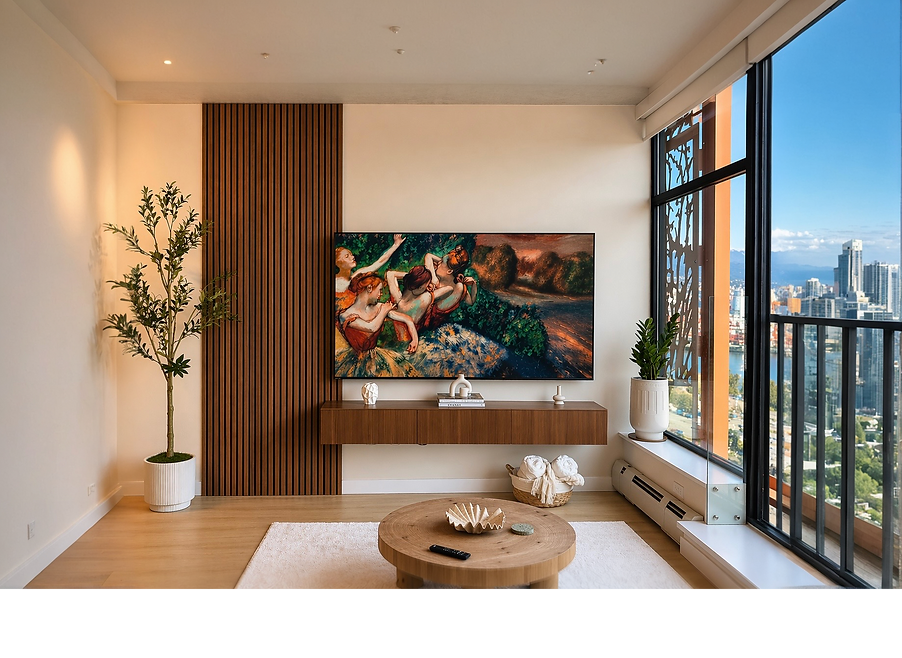
Hero photo and search-card CTR — Impact: high. Ease: easy. Effect: 7-14 days. Your hero image is the first (often only) impression a guest gets before scrolling past. Case testing shows a hero-photo swap alone lifted CTR from 2.1% to 4.8% for a comparable listing. Test bright, wide-angle shots with the room’s best feature centered, not the doorway.
First 140 characters of your title/summary — Impact: high. Ease: easy. Effect: 7-14 days. Airbnb truncates your title in search results, so lead with the strongest selling point (view, location, unique amenity) instead of generic filler like “cozy” or “charming.”
Total price accuracy — Impact: high. Ease: medium. Effect: 1-2 weeks. Airbnb’s ranking factors in price relative to comparable listings, and guests judge total cost, not nightly rate. A high cleaning fee tacked onto a low nightly rate can quietly tank your price-to-value score.
Instant Book — Impact: high. Ease: easy. Effect: days. Airbnb names Instant Book as an official ranking input, and it removes friction that costs you guests who won’t wait for approval.
Amenity completeness — Impact: medium to high. Ease: easy. Effect: days. Miss one checkbox and you disappear entirely from that filtered search, regardless of listing quality.
Review recency and trend — Impact: high. Ease: medium. Effect: 30+ days. Recent reviews now outweigh raw review count.
Calendar rules and minimum stays — Impact: medium. Ease: easy. Effect: days to weeks. Overly rigid minimums quietly exclude you from short-window searches.
Host response and cancellation rate — Impact: high. Ease: hard (behavioral). Effect: 30+ days.
Industry analyses consistently group these into five pillars: listing quality, guest experience, host metrics, pricing dynamics, and engagement signals, which lines up closely with what Airbnb states officially.
A Prioritized Action Plan: This Week, This Month, This Quarter
Ranking improvements compound. Fast fixes buy you visibility; slower behavioral fixes keep it.
Week 1:
Swap your hero photo for your strongest, brightest interior or view shot.
Rewrite the first 140 characters of your title to lead with your best differentiator.
Audit your total price, fold the cleaning fee into a fairer nightly rate if it’s inflating your total.
Turn on Instant Book if your calendar and house rules allow it.
Check every amenity box that legitimately applies.
Loosen unnecessary minimum-stay restrictions.
Month 1:
Run a controlled photo A/B test, one hero image per week, tracking CTR.
Expand to 10-25 photos covering every room and outdoor space.
Add weekly (10-15%) and monthly (20-30%) discounts, ranges industry guides commonly recommend.
Automate fast replies for common questions.
Send review requests within 48 hours of checkout.
Quarter roadmap:
Track progress toward Guest Favorites-level metrics.
Maintain steady review velocity rather than sporadic bursts.
Run a monthly calendar hygiene pass (blocked dates, stale minimums).
Audit pricing quarterly using a dynamic-pricing tool. For deeper listing polish, see how Vancouver hosts optimize their listings at the property level.
What Operational Habits Actually Move Host-Performance Scores
Airbnb tracks response time, response rate, acceptance rate, cancellation rate, and review trend as host-performance signals. Aim for sub-one-hour response times where realistic. Cancellations hurt disproportionately, one late cancellation can undo weeks of good CTR work.
For multi-property operators, this compounds. Slipping response or acceptance rate on one unit can drag down placement across similar listings in the same market, so a single neglected door has ripple effects.
Messaging and PMS tools like Hostfully and Hospitable automate guest replies, staged review requests, and cancellation-risk alerts, useful whether you run one unit or twenty.
Set auto-responders for common pre-booking questions.
Build a cancellation-minimization policy (buffer dates instead of blanket blocks).
Stagger review-request timing to land within 48 hours of checkout.
Pro Tip: Send your review request the morning after checkout, not the night of. Guests are more responsive once they’ve settled back home, and a specific, recent review carries more ranking weight than an older five-star review sitting in your history.
Pricing and Filters: Winning the Price-to-Value Comparison
Airbnb ranks on total price, not the number in bold on your calendar. A $120 nightly rate with a $95 cleaning fee reads worse to the algorithm and the guest than a transparent $150 all-in rate. Total price weighting is one of the clearer, documented ranking inputs.
Bake cleaning costs partly into the nightly rate rather than stacking a large flat fee.
Offer weekly discounts around 10-15% and monthly discounts around 20-30%.
Sharpen last-minute pricing to win gap-fill searches within 3-7 days of check-in.
Run a filter audit monthly, one missing amenity checkbox removes you from that entire filtered search segment.
Revenue-focused pricing tactics like these are covered in more depth in vacation rental revenue strategies.
How to Track Whether Your Changes Are Working
Watch six numbers: impressions, search-card CTR, listing page views, conversion rate, bookings, and review velocity.
Swap one variable at a time (hero photo only, or title only) and hold everything else constant.
Run listing-content tests for 7-14 days, that’s how long content changes typically take to show measurable effect.
Run behavioral tests (response time changes, cancellation policy shifts) for 30+ days, since those signals move slower through the ranking system.
Compare CTR and booking rate before and after each change, not just raw view counts.
Hero photo swap: expect CTR movement in 1-2 weeks.
Title rewrite: expect impression-to-view shifts in 1-2 weeks.
Response time improvement: expect ranking movement in 4-6 weeks.
Review velocity push: expect visible shifts in 4-8 weeks.
What a Property Manager Notices That Most Hosts Miss
Most underperforming listings I review aren’t broken, they’re vague. They try to appeal to business travelers, families, and party groups all at once, and end up with amenity boxes half-checked and photos that show every room equally instead of the one that sells the stay.
Pick one guest persona and write toward it: photos, captions, even your house rules.
Fix visible fees before you touch anything else, they’re the first thing that erodes trust and price-to-value scoring.
Time your review requests to the morning after checkout to build recency-weighted review velocity instead of letting reviews trickle in at random.
Pro Tip: Audit your amenity checklist every single week if you manage more than one unit. A single unchecked box silently removes you from that filtered search segment, and most hosts never notice because the listing still looks fine to them.
A Vancouver Property Manager’s Perspective
Clients who fix hero photos and total pricing typically see CTR and booking movement within two to three weeks, not months. Consider handing off operations once you’re managing more than two or three doors, can’t sustain sub-one-hour responses, or notice ratings sliding, those are the moments the workload starts costing more than it earns.

How Full-Service Management Handles the Ranking Work for You
Everything covered so far, photo testing, price audits, response-time targets, review timing, takes consistent weekly attention most owners don’t have. Nestoriaestates runs these as standing processes rather than one-off fixes: dynamic pricing adjustments, guest messaging on a fast-response schedule, cleaning coordination timed to protect your calendar, and listing optimization refreshed as Airbnb’s algorithm shifts.

For Vancouver owners weighing whether to keep managing this solo, the tipping point is usually response time. Once you can’t guarantee sub-one-hour replies across every booking window, the ranking penalty starts outweighing whatever time you save doing it yourself. Nestoriaestates builds pricing floors, calendar hygiene, and review-timing workflows into daily operations, the same behavioral signals this guide just walked through, so your listing keeps reading as reliable and high-quality to Airbnb’s ranker even when you’re not the one watching it. If you’re deciding whether to hire that kind of help, these are the questions worth asking first. Visit the Nestoria Estates services page to request a free revenue projection and see what full management would look like for your property.
Sources
FAQ
What Is the 80/20 Rule for Airbnb Hosts?
What Are the Top Three Airbnb SEO Ranking Factors?
Airbnb names quality, price, and availability as core inputs, with search-card CTR and host response time acting as the fastest-moving levers underneath them.
Is a 3.8 Rating Bad on Airbnb?
An average below competitive range is disadvantageous since Airbnb increasingly favors listings with recent, consistently strong reviews over older mixed ratings.
Who Is Airbnb’s Biggest Competitor?
Vrbo and Booking.com are the largest direct alternatives, though most hosts optimizing for Airbnb SEO ranking should focus on Airbnb’s own algorithm rather than cross-platform competition.
How Long Does It Take to See Airbnb Ranking Improvements?
Listing-content changes like photos and titles typically show effects within 7 to 14 days, while behavioral improvements like response time need 30 or more days to shift ranking.
Recommended
Comments