

Guest Experience in Rentals: Your 2026 Success Guide

TL;DR:
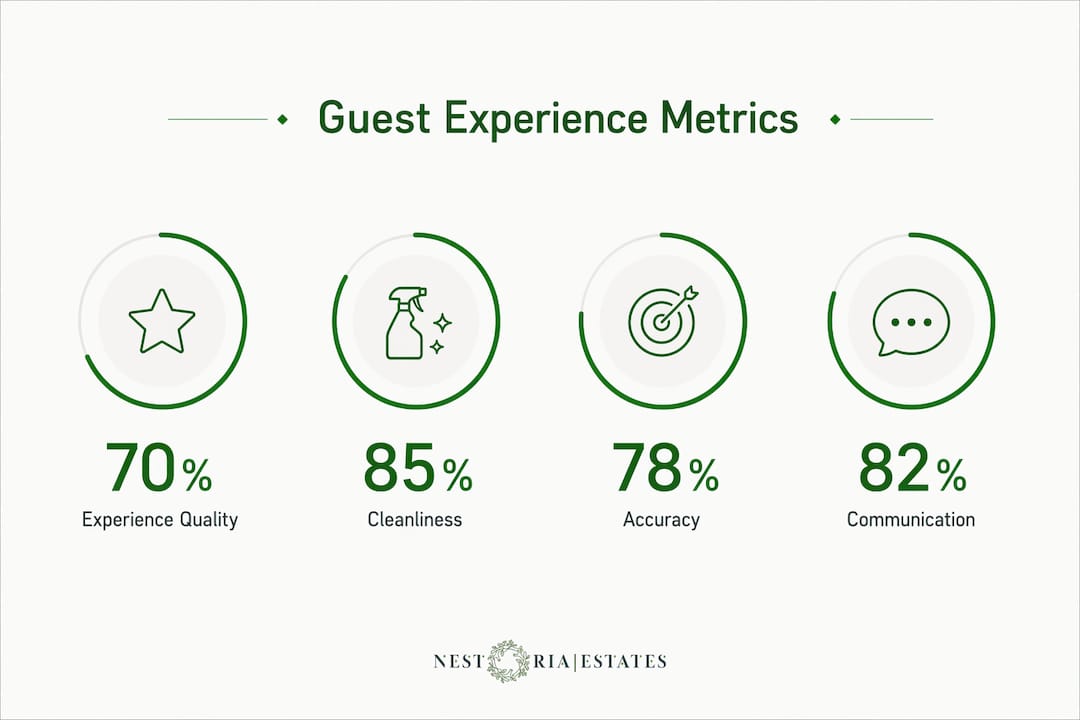
Guest experience is the most influential factor in vacation rental success, accounting for about 70% of guest satisfaction. Prioritizing operational reliability and personalization drives higher reviews, occupancy, and revenue, especially in Vancouver’s review-sensitive market. Implementing responsive communication and proactive management tools enhances guest loyalty and overall property performance.
Guest experience is the single most powerful driver of vacation rental success, outweighing price, location, and amenities in determining whether guests book, return, and recommend your property. The role of guest experience in rentals has never been more measurable: experiential factors account for about 70% of explained variance in guest satisfaction, while price contributes only about 1%. For Vancouver Airbnb owners competing in one of North America’s most active short-term rental markets, this is the number that changes everything. Operational excellence, personalized communication, and technology-backed hospitality are the three pillars that separate properties guests rave about from those they forget.
How does guest experience drive satisfaction and revenue in rentals?
Guest experience, known in the hospitality industry as Guest Experience Hospitality, is the sum of every interaction a guest has with your property from the first search result to the post-checkout message. It is not a single moment. It is a cumulative journey, and experience gaps, not price, drive discounting and guest loss.
The revenue connection is direct and well-documented:
81% of travelers read online reviews before booking a vacation rental. That means your reputation is your marketing budget.
79% of guests prefer higher-rated accommodations and will pay a premium for them. Better experience directly supports higher nightly rates.
Properties that prioritize guest experience see improved occupancy, higher average daily rates (ADR), lower dependency on OTA discounting, and stronger brand loyalty.
The mechanism is a virtuous cycle. Happy guests leave strong reviews. Strong reviews attract more bookings at higher prices. Higher revenue funds better operations, which produces happier guests. Breaking into that cycle requires a deliberate focus on the quality of every touchpoint, not just the listing photos or the thread count of your sheets.
Vancouver’s short-term rental market is particularly review-sensitive. Guests traveling to the city for tourism, business, or relocation research extensively before committing. A property with a 4.9-star average on Airbnb does not just rank higher in search. It commands rates that a 4.6-star property simply cannot justify, even if both properties are physically identical.
Pro Tip: Track your review scores by category, not just overall rating. Airbnb breaks scores into cleanliness, accuracy, check-in, communication, location, and value. A low score in one category tells you exactly where to invest next.
Which guest experience elements matter most for rental success?
The most common mistake Vancouver Airbnb owners make is spending money on luxury upgrades while ignoring the basics. Guests value operational reliability more than luxury add-ons. A broken shower handle or a slow Wi-Fi connection will generate a negative review faster than the absence of a coffee machine ever would.

The elements that consistently drive guest satisfaction in vacation rentals break down into three tiers:
Tier 1: Non-Negotiables
Spotless cleanliness on arrival
Fully functional appliances, locks, and utilities
Accurate listing description with no surprises
Smooth, frictionless check-in process
Tier 2: Strong Differentiators
Responsive communication before and during the stay
Personalized local recommendations (restaurants, transit, hidden gems in Vancouver’s neighborhoods like Gastown or Kitsilano)
Proactive problem resolution before guests have to ask
Tier 3: Loyalty Builders
Post-stay follow-up and review requests
Returning guest recognition and small gestures
Consistent experience across every booking
The frictionless guest journey is built on proactive communication and the feeling that someone is genuinely looking after the guest. That feeling does not require a five-star hotel budget. It requires attention and systems.
Pro Tip: Create a digital welcome guide specific to your Vancouver property. Include the nearest SkyTrain station, grocery stores, and your top three restaurant picks. Guests who feel oriented from day one leave better reviews and fewer support messages.
What role does technology play in enhancing guest experience?
Technology is now a core part of delivering great guest experience at scale, but the goal is to remove friction, not replace warmth. The hospitality industry is moving from basic AI chatbots toward agentic AI systems that perform tasks autonomously, freeing human teams to focus on empathy-driven interactions. That shift matters for property managers handling multiple Vancouver listings.
Here is how to apply technology without losing the human touch:
Automate routine communication. Pre-arrival instructions, check-in codes, and checkout reminders should be automated. Response times under 60 seconds via AI-powered tools significantly improve guest satisfaction compared to manual methods. Guests do not care if a bot sent the check-in code. They care that it arrived instantly.
Use mobile-first guest portals. Modern guests expect mobile-first, transparent, self-service portals for communication and information. A simple digital guide accessible on a phone beats a printed binder every time.
Reserve human attention for high-stakes moments. When a guest reports a maintenance issue, a noise complaint, or a personal problem, a real person should respond. Technology should reduce friction without replacing the human warmth that drives retention and satisfaction.
Invest in connected property management software. Tools like Guesty, Hostaway, or Lodgify integrate messaging, pricing, and maintenance tracking into one platform. That connectivity means fewer things fall through the cracks and guests get faster answers.
The right technology stack does not require a large overhead. Simple, connected guest journeys and proactive communication create the frictionless experience guests remember and recommend.
How can vancouver airbnb owners apply these strategies in 2026?
Vancouver Airbnb owners face a specific competitive environment. The city draws international travelers, business visitors, and domestic tourists year-round. Guests arrive with high expectations and strong alternatives. The owners who win are those who treat guest experience as a business system, not a series of one-off gestures.
Here are the strategies that produce measurable results:
Fix operations before adding perks. Audit your property for anything that could break or frustrate a guest. A booking workflow that removes friction at check-in is worth more than a new espresso machine.
Respond to every review, positive or negative. Responding to reviews signals to future guests that you are attentive. It also gives you a chance to address concerns publicly, which builds trust.
Use guest feedback as a product roadmap. Every complaint is a free consulting report. If three guests mention the blackout curtains are inadequate, that is a $40 fix that will improve every future review.
Align your pricing with your experience level. Properties that maximize rental revenue in Vancouver do so by pairing competitive dynamic pricing with consistently strong reviews. You cannot charge premium rates with average scores.
Personalize at scale. Use guest names in all communications. Reference their trip purpose if they mentioned it. A message that reads like it was written for one person costs nothing extra and creates a lasting impression.
The comparison below shows how a guest-centric approach changes outcomes versus a property-first approach:
Focus Area | Property-First Approach | Guest-Centric Approach |
Maintenance | Fix issues when reported | Inspect proactively before each stay |
Communication | Respond within 24 hours | Respond within 60 seconds via automation |
Reviews | Hope for good ones | Actively request and respond to all reviews |
Pricing | Set and forget | Adjust dynamically based on experience ratings |
Amenities | Add luxury features | Fix operational basics first |
The short-term rental advantages over hotel stays come precisely from this personal, attentive approach. Guests choose vacation rentals for the feeling of a home. Your job is to deliver that feeling reliably, every single stay.
Key takeaways
Guest experience is the primary lever for rental revenue growth, and operational reliability drives satisfaction more than luxury amenities ever will.
Point | Details |
Experience drives revenue | Experiential quality explains 70% of guest satisfaction variance; price contributes only 1%. |
Reviews are your marketing | 81% of travelers read reviews before booking, making every stay a direct revenue opportunity. |
Fix basics before adding perks | Guests value working appliances and smooth check-in over high-end extras. |
Speed matters in communication | AI-powered responses under 60 seconds measurably improve guest satisfaction scores. |
Feedback is a free improvement tool | Use guest reviews to identify and fix specific gaps in your property’s experience. |
The part most owners get wrong
I have worked with dozens of Vancouver property owners who are convinced that the path to better reviews runs through a kitchen renovation or a new smart TV. They are almost always wrong. The guests who leave four-star reviews instead of five-star reviews are not complaining about the furniture. They are writing things like “the host took a while to respond” or “the shower pressure was low.” Those are $0 and $150 fixes, respectively.
The deeper issue is that most owners think about guest experience as a hospitality concept when it is actually an operations concept. The emotional connection a guest feels at your property is built on a foundation of things working correctly and someone being available when they do not. That is not glamorous. It is also not optional.
What I find genuinely underappreciated is the compounding effect of consistent experience. A property that delivers a solid 4.8-star stay every single time will outperform a property that occasionally delivers a 5-star stay but averages 4.5 due to inconsistency. Guests trust patterns. Algorithms reward them too.
The technology piece is real, but it is a tool, not a strategy. Agentic AI and automated messaging free you up to be more human when it counts, not less human overall. The owners I see winning in Vancouver’s market in 2026 are the ones who use automation for the predictable and show up personally for the unexpected.
If you are managing your own property, the property management best practices that matter most are not complex. They are consistent. Build systems, respond fast, fix things quickly, and ask every guest for feedback. Do that 50 times and your listing will look after itself.
— Kamran
How Nestoriaestates helps vancouver owners deliver better guest experiences
Managing guest experience at a high level takes time, systems, and local knowledge. Nestoriaestates specializes in Airbnb and short-term rental management across Vancouver, handling every operational detail that shapes how guests feel about your property.
From fast guest communication and proactive maintenance coordination to dynamic pricing and detailed owner reporting, Nestoriaestates builds the systems that turn average stays into five-star reviews. Vancouver property owners who work with Nestoriaestates remove themselves from the daily grind while their properties perform at a higher level. If you want to see what your property could earn with professional management behind it, explore the full rental management services Nestoriaestates offers and request a free revenue projection.
FAQ
What is the biggest factor in vacation rental guest satisfaction?
Experiential quality is the dominant factor, accounting for approximately 70% of explained variance in guest satisfaction. Price contributes only about 1% to satisfaction outcomes.
How do guest reviews affect rental revenue?
81% of travelers read reviews before booking, and 79% will pay a premium for higher-rated properties. Strong reviews directly support higher nightly rates and better occupancy.
How fast should a vacation rental host respond to guests?
Response times under 60 seconds via AI-powered communication tools significantly improve guest satisfaction. Automating routine messages like check-in instructions achieves this without requiring constant manual attention.
Should i upgrade amenities or fix operational issues first?
Fix operational issues first. Guests value working appliances, clean spaces, and smooth check-in over luxury add-ons. Operational reliability consistently outranks premium features in guest satisfaction research.
How can vancouver airbnb owners use guest feedback to improve performance?
Treat every review as a specific improvement signal. Recurring complaints about the same issue, such as slow Wi-Fi or inadequate lighting, identify the highest-return fixes for your next investment in the property.
Recommended
Comments