
Luxury Rental Listing Workflow: 2026 Vancouver Guide
- info67421305
- Jun 14
- 8 min read
TL;DR:
A structured workflow ensures consistent, compliant, and high-quality luxury rental listings in Vancouver. Implementing automation, proper asset preparation, and regular reviews helps maximize income and avoid costly mistakes. Treating the listing process as a system and adhering to city regulations is crucial for long-term success.
A structured workflow for listing luxury rentals is the single most reliable system for turning a high-end Vancouver property into a consistent income asset. Without it, owners face compliance gaps, inconsistent photography, and missed bookings across platforms like Airbnb. The right process for luxury rental listings covers four pillars: legal compliance, asset preparation, multi-platform launch, and ongoing performance review. This guide walks you through each step with the specificity that premium properties demand.
What is the workflow for listing luxury rentals?
The workflow for listing luxury rentals is a repeatable operating system that moves a property from vacant unit to fully booked listing in a controlled sequence. It is not a checklist you run once. It is a governance structure that every team member follows, every time, across every property in your portfolio.
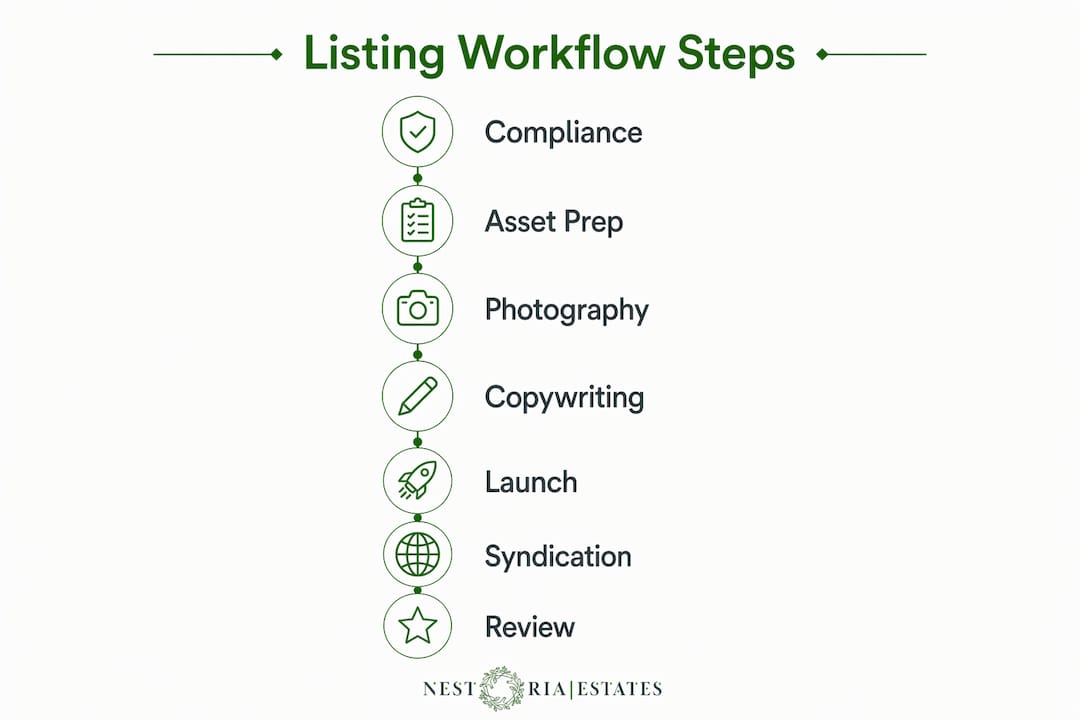
Standardizing roughly 90% of listing operations with controlled exceptions preserves bespoke quality while scaling luxury rental management. That figure matters because it means you can maintain a premium guest experience without rebuilding your process from scratch for each new property. The remaining 10% is where you tailor the listing to the property’s unique features, whether that is a rooftop terrace in Coal Harbour or a private dock in West Vancouver.
A disciplined operating system with KPIs such as launch cycle time, task completion rate, and open loops resolved dramatically shortens time-to-market and stabilizes workflow for luxury listings. Shorter time-to-market means fewer vacant nights and more revenue per year.
What compliance steps must come before listing in vancouver?
Vancouver enforces some of the strictest short-term rental regulations in Canada. Skipping the compliance phase does not just risk a fine. It can result in your listing being removed entirely, which costs you far more than the permit fees.
Before you publish any listing, confirm the following:
Short-term rental license: The City of Vancouver requires a valid business license for any rental under 30 consecutive nights. Apply through the City’s online portal before your listing goes live.
Principal residence requirement: Vancouver’s rules restrict short-term rentals to your principal residence. Investment properties face additional scrutiny, so confirm your property’s eligibility with a licensed real estate advisor.
Land use permit timing: Some jurisdictions enforce strict windows for license applications after land use permit approval. Operating licenses require applying within deadlines post land use permit approval, or permits become void and require reapplication under new rules. Vancouver follows a similar principle, so track every deadline precisely.
Strata approval: If your property is in a strata building, confirm that the strata bylaws permit short-term rentals. Many Vancouver strata corporations have banned them outright.
Agent authorization documentation: If a property manager like Nestoriaestates is acting on your behalf, prepare a signed authorization letter. Platforms and city offices both require it.
The role of permits and licenses in short-term rental listings is not administrative formality. It is the foundation that every other step in your workflow depends on.
How do you prepare luxury property assets for a compelling listing?
Asset preparation is where most luxury rental owners leave money on the table. A property worth $3 million deserves photography and copy that match its value. Generic smartphone photos and templated descriptions signal to prospective guests that the experience will be equally generic.
Photography standards that convert
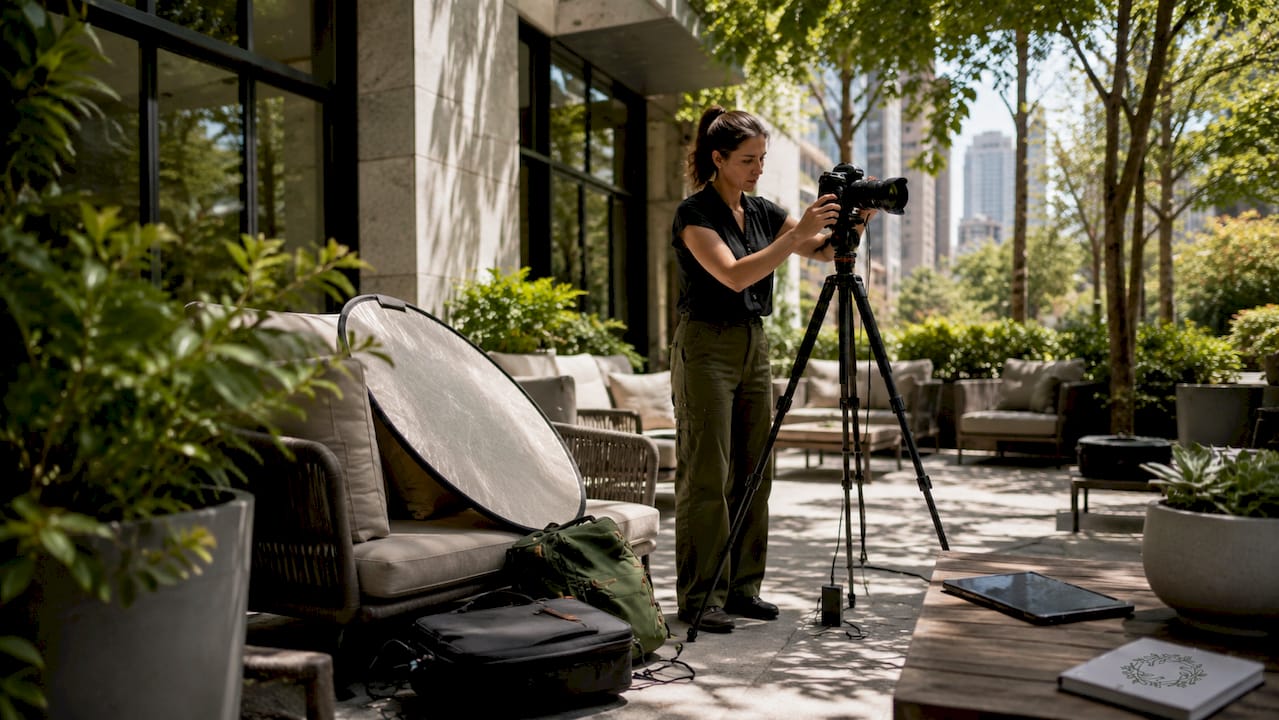
Ideal luxury rental photo galleries contain 25–35 high-detail images showing every room and unique amenity, vastly outperforming minimal photo counts. Airbnb allows up to 100 photos, but fewer than 15 correlates with measurably lower listing performance. The 25–35 range is the sweet spot because it gives guests enough visual confidence to book without overwhelming them.
Organize your photo gallery as a virtual tour that follows the guest’s arrival path: front entrance, living areas, kitchen, bedrooms, bathrooms, outdoor spaces, and then unique amenities like a wine cellar or home theater. This sequencing mirrors how guests mentally walk through a property before committing.
Photo accuracy matters as much as photo quality. Mismatch between listing photos and the actual unit causes lower conversion and wasted inquiries. Use unit-specific photos, never representative shots from a similar property in your portfolio.
Pro Tip: Update your photo gallery seasonally. A Vancouver property photographed in summer with natural light and open windows tells a different story than the same property in winter. Both versions attract different guest segments and justify year-round pricing.
Copywriting for high-end guests
Your listing description should lead with the property’s most distinctive feature, not its square footage. “Private rooftop with panoramic views of Burrard Inlet” outperforms “3-bedroom luxury condo” every time. Follow with amenity specifics, neighborhood context, and house rules written in a tone that matches the guest you want to attract.
Bullet lists work well for amenities. Narrative paragraphs work better for setting the scene. Use both.
What is the step-by-step process to launch and syndicate your listing?
A luxury rental launch should follow a timed checklist that treats going live as an operational sprint, not a casual upload. The table below maps the core timeline:
Day | Task | Owner |
Day -14 | Complete SKU inventory and tag all amenities | Property manager |
Day -7 | Finalize photography and draft listing copy | Marketing lead |
Day -3 | Submit listing for internal approval review | Operations lead |
Day 0 | Publish listing with launch promotional rate | Property manager |
Day +7 | Review inquiry rate, photo performance, and pricing | Analytics lead |
Day +30 | Update SOPs based on launch learnings | Operations lead |
Syndication and automation
Multi-platform syndication uses automated status sync to remove leased units from all platforms instantly and update availability when make-ready completes. This prevents double bookings, which are catastrophic for luxury properties where guest expectations are highest.
Synchronizing listing status with unit turnover and lease signing automation increases availability accuracy and inquiry rates by 22%. That is a direct revenue impact from a single workflow decision.
For premium programs, the bar is even higher. Airbnb Luxe requires a rigorous 300-point on-site inspection reflecting operational and material standards beyond aesthetics for premium listing acceptance. The process involves an application review, a consultative checklist visit, and a detailed audit. If Airbnb Luxe is your target tier, build that inspection readiness into your pre-launch checklist from day one.
Pro Tip: Use API-based platform integrations rather than manual cross-posting. Manual updates introduce human error and lag time. A property management platform that connects directly to Airbnb, Vrbo, and direct booking channels via API keeps your calendar accurate in real time.
Automation in luxury rental marketing is critical not just for convenience but as a risk-control mechanism that avoids double bookings and availability discrepancies. Treat it as infrastructure, not a nice-to-have feature.
How do you fix common listing problems and improve performance?
Even a well-executed launch will surface issues within the first two weeks. The best operators build a review cycle into their workflow rather than waiting for problems to compound.
Common issues to watch for after launch:
Availability drift: Calendar discrepancies between platforms signal a broken sync. Audit your integration settings at the +7 day mark.
Photo quality mismatch: If inquiry rates are low despite strong pricing, the photos are likely the bottleneck. Commission a reshoot before adjusting price.
Approval delays: Premium listings often require internal sign-off before going live. If your approval process takes more than 48 hours, it is costing you bookings. Map the decision escalation path and assign clear owners.
Pricing misalignment: Vancouver’s luxury rental market shifts with seasons, major events, and inventory changes. Review your pricing weekly for the first 30 days, then monthly once the listing stabilizes.
“Treating every property as unique without standardization leads to inefficiency. Control variation to keep consistency while tailoring the guest experience.” — Scalable Luxury Listing Management
At the +30 day mark, update your standard operating procedures based on what the launch revealed. This is how your workflow improves with every property you add to your portfolio. A luxury property management guide that includes post-launch review cycles consistently outperforms one that treats go-live as the finish line.
Key takeaways
A disciplined workflow for listing luxury rentals, built on compliance, accurate assets, automated syndication, and structured review cycles, is the most reliable path to maximizing rental income in Vancouver’s competitive market.
Point | Details |
Compliance comes first | Secure Vancouver short-term rental licenses and strata approval before any listing goes live. |
Photography drives conversion | Use 25–35 unit-specific images organized as a virtual tour to build guest confidence. |
Automate platform syndication | API-based status sync prevents double bookings and increases inquiry rates by 22%. |
Launch as an operational sprint | Follow a timed checklist from day -14 through a +30 day retrospective to catch and fix issues fast. |
Standardize to scale | Locking down 90% of operations with controlled exceptions lets you grow without losing quality. |
What running this workflow taught me about luxury listings in vancouver
I have seen property owners spend weeks perfecting a listing description while their compliance paperwork sat incomplete. The listing never went live. That is the most expensive mistake in this business, and it is entirely avoidable.
The operators who generate the most consistent income from Vancouver luxury rentals share one trait: they treat the listing process as a system, not a series of one-off tasks. They do not reinvent the wheel for each property. They run the same workflow, measure the same KPIs, and iterate based on data rather than instinct.
The compliance piece is non-negotiable in Vancouver specifically. The city’s short-term rental rules have tightened considerably, and the cost of a removed listing or a bylaw fine far exceeds the cost of getting the permits right the first time. Build compliance into the first phase of your workflow and never treat it as optional.
The part most owners underestimate is the post-launch review cycle. Publishing a listing is not the end of the process. The +7 and +30 day reviews are where you discover whether your pricing is competitive, whether your photos are converting, and whether your automation is actually working. Skipping those reviews is like launching a product and never checking the sales data.
The property management workflow for luxury rentals that works long-term is the one you can hand off to a team member and trust they will execute it the same way you would. That level of documentation takes effort upfront, but it pays back every time you add a new property.
— Kamran
How Nestoriaestates handles this workflow for you
Managing a luxury rental listing workflow across compliance, photography, syndication, and performance review is a full-time operation. Most property owners in Vancouver have neither the time nor the platform access to run it at the level premium properties require.
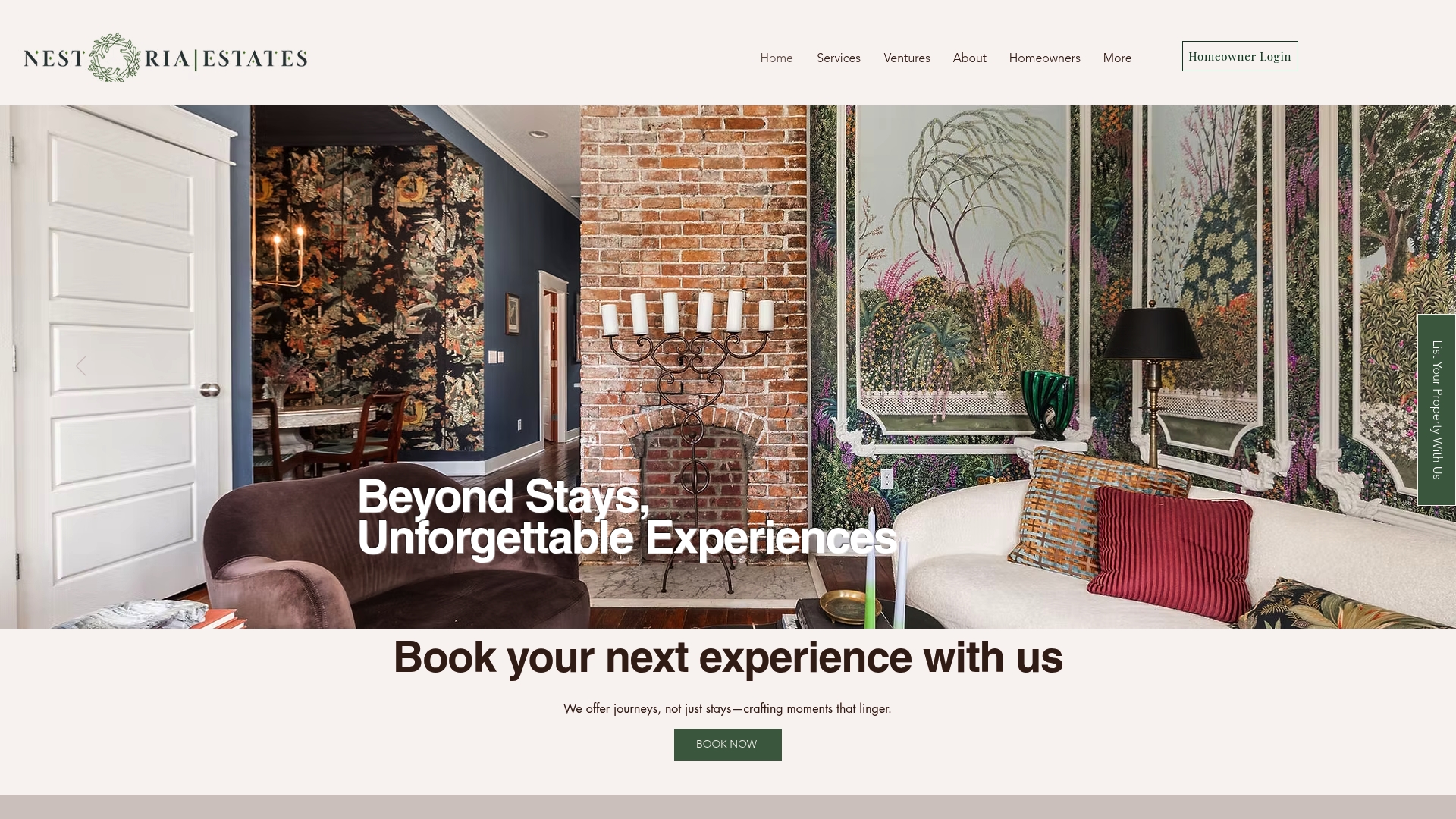
Nestoriaestates specializes in exactly this. From securing the right permits and coordinating professional photography to managing multi-platform syndication and weekly pricing adjustments, the team handles every operational step so you do not have to. Owners get transparent reporting, real-time availability management, and data-driven pricing without touching the day-to-day. If you want to see what your Vancouver property could earn under a managed workflow, explore Nestoriaestates’ full services or reach out directly to request a free revenue projection.
FAQ
What is the first step in a luxury rental listing workflow?
The first step is confirming legal compliance, including securing a valid short-term rental business license and confirming strata approval in Vancouver. No listing should go live before these are in place.
How many photos does a luxury rental listing need?
The ideal range is 25–35 high-quality, unit-specific images organized as a virtual tour. Listings with fewer than 15 photos consistently underperform on platforms like Airbnb.
How do i prevent double bookings across multiple platforms?
Use API-based platform integrations that sync availability status in real time. Automated status sync linked to unit turnover events increases availability accuracy and reduces double booking risk significantly.
Does airbnb have a premium tier for luxury rentals?
Airbnb Luxe is the platform’s premium tier and requires passing a 300-point on-site inspection covering operational standards, privacy, soundproofing, and material quality. Properties must apply and pass a consultative audit before acceptance.
How often should i review a luxury rental listing after launch?
Review performance at +7 days and +30 days post-launch. The +7 review catches pricing and photo issues early. The +30 review is where you update your standard operating procedures based on real booking data.
Recommended
Comments