
Romantic Vacation Rental Workflow for Couples in 2026
- info67421305
- Jul 4
- 8 min read
TL;DR:
A romantic vacation rental workflow helps couples plan, book, and customize accommodations for memorable experiences. Using shared tools, timely communication, and personal touches reduces stress and enhances intimacy during each trip phase.
A romantic vacation rental workflow is the organized process couples use to plan, book, and manage accommodations that create intimate and memorable travel experiences. Without a clear process, couples waste hours debating options, miss booking windows, and arrive at rentals that feel generic rather than personal. The good news: a structured approach to couples getaway planning reduces friction at every stage, from the first search to the post-trip review. This guide walks you through every step, with timing benchmarks, communication tactics, and personalization strategies that actually work.
What is a romantic vacation rental workflow?
A romantic vacation rental workflow is a repeatable system that covers four phases: planning, booking, staying, and following up. Each phase has specific tasks, timing, and tools. The goal is to remove guesswork so couples spend their energy on each other, not on logistics. Effective romantic vacation planning treats the planning process itself as an intimacy builder, using shared digital tools to align on budget and travel style before a single reservation is made.

Most couples skip the workflow entirely and rely on impulse decisions. That leads to mismatched expectations, last-minute price spikes, and rentals that don’t reflect what either partner actually wanted. A defined process fixes all three problems.
When should you book a romantic vacation rental?
Timing is the single most controllable variable in couples getaway planning. Peak weekend getaways require booking 6–8 weeks in advance, while off-peak escapes need only 2–3 weeks of lead time. For premium properties with features like private hot tubs, waterfront views, or chef kitchens, planning complex trips often requires 3–6 months of lead time.
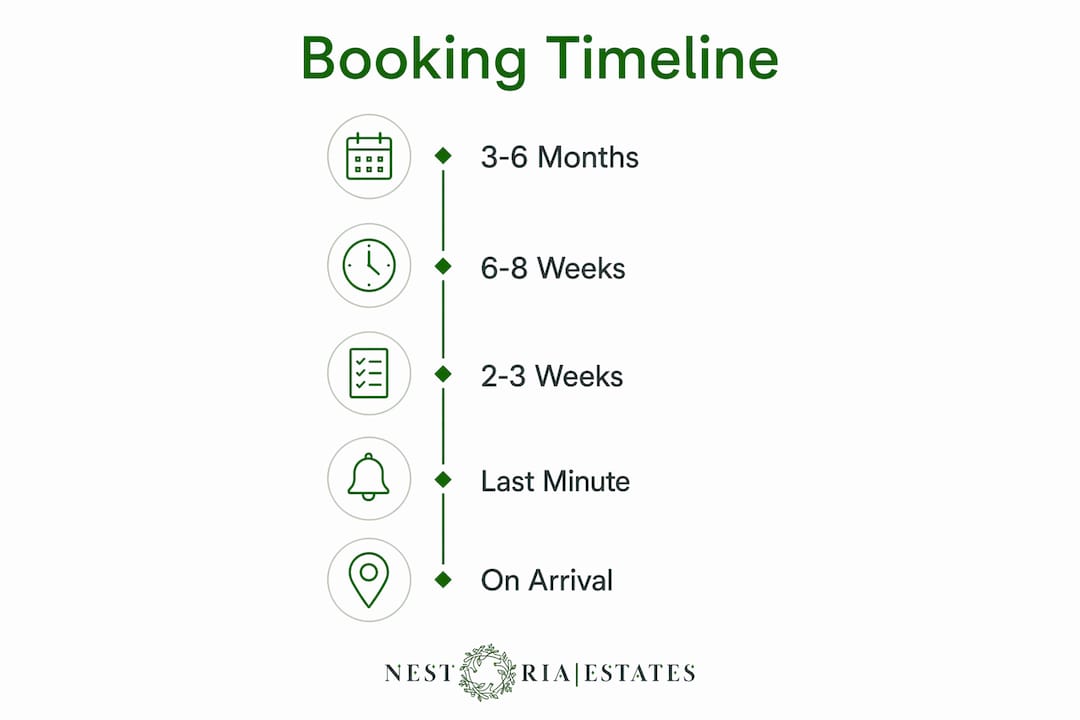
The table below shows how timing affects your options and pricing.
Booking window | Season type | What to expect |
3–6 months out | Peak holidays, Valentine’s Day, anniversaries | Best property selection, negotiable add-ons |
6–8 weeks out | Peak weekends, long weekends | Good availability, standard pricing |
2–3 weeks out | Off-peak weekdays or shoulder season | Last-minute deals, limited premium inventory |
Under 1 week | Any season | High prices, low availability for romantic properties |
Book earlier than you think you need to. The best romantic accommodation options fill up fast, especially properties that hosts curate specifically for couples.
Pro Tip: Before you search for properties, agree on three things with your partner: travel dates, a firm budget, and one non-negotiable feature each. This 15-minute conversation prevents hours of back-and-forth later.
What digital tools make the vacation rental booking process easier for couples?
The right tools cut research time dramatically. AI-assisted itinerary planners reduce total research and booking time to roughly 90 seconds by accepting multiple interest inputs from both partners simultaneously. That means one partner’s preference for hiking and the other’s preference for wine tasting both show up in the same draft itinerary, without a negotiation fight.
Beyond itinerary planning, communication workflows matter just as much. The best practice for vacation rental hosts is sending detailed check-in information 24–48 hours before arrival to prevent guest anxiety and last-minute confusion. As a couple booking a rental, you should expect and request this cadence from any host you work with.
Here is the communication sequence that works best for romantic rental bookings:
Booking confirmation: Receive written confirmation with all key details within 24 hours of booking.
Pre-arrival message (24–48 hours out): Check-in instructions, parking, door codes, and local emergency contacts.
Day-of arrival note: A short, personal welcome message from the host with one local recommendation.
Mid-stay check-in (day 2 or 3): A brief message asking if everything is comfortable, which opens the door for requests.
Post-checkout follow-up: A thank-you message with a review request and any deposit return details.
For day-of coordination, shared tools like Google Maps saved lists and a shared calendar entry with all reservation times keep both partners on the same page without constant texting. Sharing trip calendars in digital tools enhances flexibility and reduces stress on the day itself.
Pro Tip: Message the host directly before booking, not just through the platform’s automated system. Direct host messaging often triggers concierge-style treatment and local tips that automated systems never surface.
How do you personalize a romantic vacation rental stay?
Personalization is the difference between a nice trip and a trip you talk about for years. The single most effective tactic costs nothing: mention the trip reason in your booking notes. Stating “this is our fifth anniversary” in the reservation message frequently unlocks room upgrades, welcome gifts, and personalized hospitality that generic bookings never receive.
When evaluating properties, prioritize these ambiance features:
Private outdoor space: A balcony, patio, or deck with seating creates natural moments for connection without leaving the property.
Fireplace or fire pit: Consistently rated among the top amenities for romantic stays, especially in cooler climates.
Spa tub or soaking bath: Adds a spa-like quality to the stay without the cost of a resort.
Dimmable lighting: A small detail that dramatically changes the mood of a space.
Full kitchen: Cooking a meal together is one of the most reliably intimate activities couples report enjoying on getaways.
Thoughtful add-ons make the stay feel curated rather than generic. Fresh flowers, a bottle of wine on arrival, a pre-ordered breakfast basket, or a surprise dessert from a local bakery all land well when timed correctly. The timing matters as much as the gesture itself. Pre-arrival generic upsells can actually harm the romantic mood. Requests handled personally, either by you or by a sentiment-aware host, preserve the intimacy that automated mass messages destroy.
The “one anchor experience” approach to itinerary planning is the most underused tactic in romantic travel. Overpacked 12-hour itineraries increase stress and reduce the quality of each individual experience. One meaningful shared activity per day, whether a cooking class, a sunset sail, or a spa afternoon, leaves room for spontaneity and genuine relaxation.
Step-by-step: building your romantic vacation rental workflow
A clear numbered process makes the whole system repeatable for every trip you take together.
Agree on the basics. Set travel dates, a firm budget, and one non-negotiable feature each before opening any booking platform. Use a shared notes app or Google Doc to record decisions.
Draft your itinerary with an AI planner. Input both partners’ interests into an AI itinerary tool. Accept the first draft as a starting point, not a final plan. Adjust for pacing using the one anchor experience rule.
Book accommodations directly with the host. State your trip purpose in the booking message. Ask about upgrades, welcome amenities, or local recommendations. This single step consistently produces better stays.
Set up your communication expectations. Confirm the host will send pre-arrival details 24–48 hours out. If they don’t offer this automatically, request it. Save all check-in details in one shared note.
Build your day-of coordination list. Create a shared Google Maps list with every reservation location. Add restaurant confirmation numbers, activity addresses, and the rental’s exact address to one document both partners can access offline.
Protect downtime. Block at least two hours of unscheduled time each day. This is where the best moments of any romantic trip actually happen.
Send a post-stay message. Write a genuine review and thank the host personally. Good hosts remember repeat guests and offer better treatment on future bookings. This step costs two minutes and pays off on every return visit.
Pro Tip: Book a refundable transportation option when possible. Flexible travel arrangements reduce stress and let you extend a great dinner or change plans without penalty.
Key Takeaways
A well-executed romantic vacation rental workflow reduces planning stress, improves host communication, and produces stays that feel personal rather than transactional.
Point | Details |
Book early for peak dates | Peak weekend rentals require 6–8 weeks lead time; premium properties need 3–6 months. |
Use AI itinerary tools | AI planners accept both partners’ inputs and cut research time to under two minutes. |
State your trip purpose | Mentioning your occasion in booking notes frequently unlocks upgrades and personalized hospitality. |
Follow the one anchor rule | One main shared experience per day leaves room for spontaneity and reduces trip stress. |
Communicate directly with hosts | Direct pre-booking messages produce concierge-level treatment that automated systems cannot replicate. |
Why the workflow itself is the romantic act
Most couples treat planning as a chore to survive before the fun starts. That framing is wrong, and it costs them. The planning process, when done collaboratively with shared tools and honest conversations about preferences, builds anticipation and alignment. By the time you arrive at the rental, you are already more connected than when you started.
The biggest mistake I see couples make is over-delegating the personal details to automated systems. Automation handles logistics well. It handles intimacy poorly. The mid-stay check-in message that asks “Is everything comfortable?” feels warm when a host writes it personally. It feels like spam when it arrives at 9:00 AM from a scheduling tool. The distinction matters more than most couples realize until they experience both.
Flexibility is not the opposite of planning. It is the reward for planning well. When your logistics are locked in, you can say yes to the unexpected: the local market you stumble across, the extra hour at the vineyard, the spontaneous detour to a viewpoint. The couples who report the best romantic getaways are not the ones who planned the least. They are the ones who planned the right things and left everything else open.
The luxury vacation rental experience is not about the price of the property. It is about how well every detail was considered before you arrived.
— Kamran
How Nestoriaestates supports your romantic rental experience
Couples who want a genuinely memorable stay deserve more than a standard booking confirmation.
Nestoriaestates manages short-term rental properties across Canada and the United States with a focus on guest experience, personalized communication, and property quality. For couples planning romantic getaways, Nestoriaestates-managed properties come with professional guest communication workflows, well-maintained spaces, and hosts who understand the value of personal touches. If you are a property owner in Vancouver or elsewhere in North America looking to offer guests this level of experience, the full services overview details how Nestoriaestates handles every operational aspect, from pricing to guest messaging, so your property delivers the kind of stay couples remember.
FAQ
How far in advance should couples book a romantic rental?
Book peak weekend rentals 6–8 weeks out and premium properties 3–6 months in advance. Off-peak escapes typically need only 2–3 weeks of lead time.
Does mentioning an anniversary actually get you upgrades?
Yes. Stating the trip reason in your booking notes, such as an anniversary or honeymoon, frequently prompts hosts to offer upgrades, welcome gifts, or personalized touches that standard bookings do not receive.
What is the one anchor experience rule?
The one anchor experience rule means scheduling one main shared activity per day and leaving the rest of the time unplanned. This approach reduces stress and creates space for the spontaneous moments that define the best romantic trips.
What should a pre-arrival message from a host include?
A good pre-arrival message arrives 24–48 hours before check-in and covers door codes, parking instructions, check-in timing, and at least one local recommendation. If your host does not send this automatically, request it directly.
How do AI itinerary planners help couples avoid planning conflicts?
AI itinerary tools accept interest inputs from both partners simultaneously and generate a balanced draft plan in roughly 90 seconds. This removes the negotiation phase that causes most couples’ planning disputes.
Recommended
Comments