

The Role of Vacation Rental Platforms for Vancouver Hosts

TL;DR:
Vacation rental platforms connect property owners with travelers and support local economies through a significant impact. Vancouver hosts must comply with regulations, use professional tools, and treat rentals as a business to remain profitable. Operating with documented income and modern management strategies is essential in Vancouver’s competitive 2026 market.
Vacation rental platforms are digital marketplaces that connect property owners with travelers seeking short-term accommodations, fundamentally reshaping how stays are booked and managed. Canada had approximately 550,000 vacation rental units in 2023, a 15% increase since 2020, with 60% concentrated in urban centers like Vancouver. These platforms do far more than list properties. They function as full operating systems for hosts, handling everything from pricing to guest communication. For Vancouver Airbnb owners, understanding how these platforms work is no longer optional. It is the foundation of running a profitable, compliant short-term rental business.
What is the role of vacation rental platforms in the short-term rental market?
Vacation rental platforms serve as intermediaries between property owners and travelers, replacing the traditional hotel booking model with a peer-to-peer alternative. The industry term for this model is “short-term rental distribution,” and it covers everything from listing creation to payment processing. These platforms give individual property owners access to a global audience that would otherwise require a marketing budget far beyond reach.

The economic weight of this role is significant. Vacation rental platforms contributed $2.8 billion to Canada’s GDP in 2022 and supported 22,000 jobs. That figure reflects not just host income, but the downstream spending travelers generate in local restaurants, shops, and services.
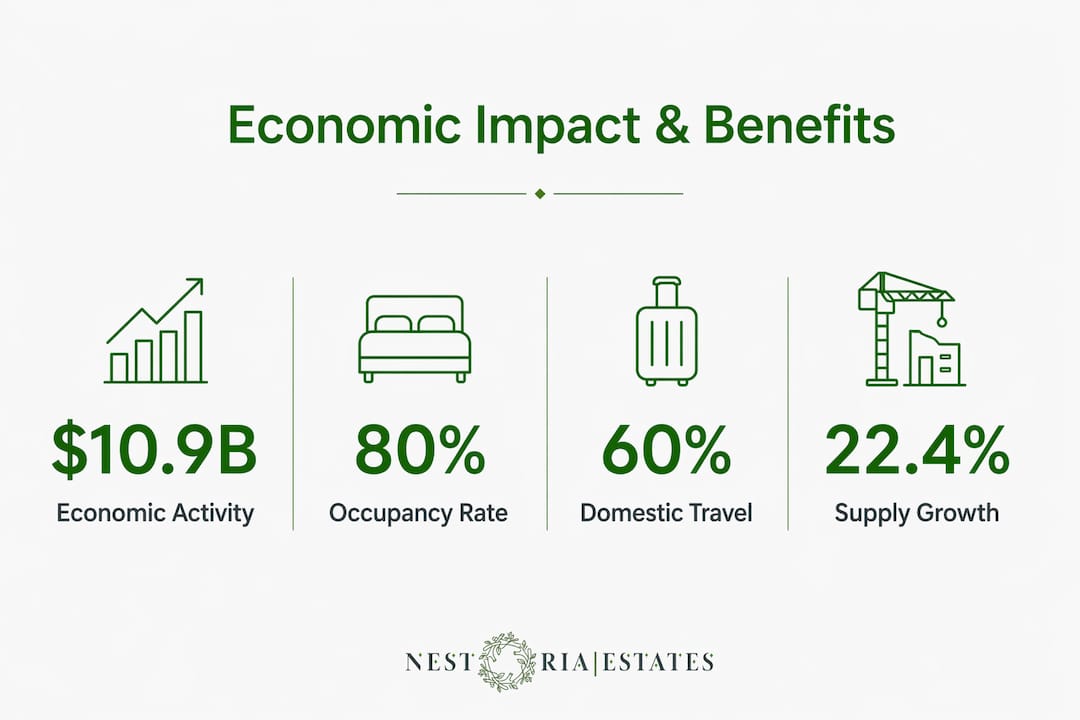
For Vancouver Airbnb owners specifically, platforms provide the infrastructure to compete in one of Canada’s most active short-term rental markets. Vancouver occupancy rates reached 80% in 2025, a figure that reflects both strong demand and the platform’s ability to connect hosts with the right guests at the right time.
How do vacation rental platforms benefit travelers, hosts, and local economies?
The advantages of vacation rentals extend across three distinct groups: travelers, property owners, and the communities that host them.
For travelers, platforms deliver:
Transparent guest reviews that reduce booking uncertainty
Access to a wide variety of property types, from studio condos to full houses
Flexible cancellation policies and secure payment processing
Neighborhood-level accommodations that hotels cannot replicate
For property owners, the benefits are operational and financial:
Automated booking calendars that eliminate manual scheduling
Built-in marketing reach across millions of active users
Dynamic pricing tools that adjust nightly rates based on demand
Consolidated guest messaging through a single inbox
For local economies, the impact is measurable. Domestic travel accounted for over 60% of all short-term rental platform activity in Canada in 2025, generating $10.9 billion in economic activity. That activity supported over 100,000 jobs and $360 million in tax revenue. These numbers show that vacation rental platforms are not just convenient booking tools. They are economic infrastructure.
Pro Tip: If you own a property in Vancouver, list across multiple platforms simultaneously rather than relying on a single channel. Multi-channel distribution consistently produces higher occupancy rates than single-platform hosting.
What features and technology power vacation rental platforms?
Vacation rental platforms operate through a layered technology stack that handles the full guest lifecycle, from search to checkout. Understanding these features helps property owners choose the right tools and management approach.
Vacation rental management software typically includes multi-channel listing management, dynamic pricing algorithms, booking and payment processing, and guest communication tools. Each layer serves a distinct function.
Core platform features ranked by operational impact
Multi-channel listing management syncs your property across multiple booking platforms in real time, preventing double bookings and maximizing visibility.
Dynamic pricing algorithms adjust nightly rates based on local demand, seasonal trends, competitor supply, and event calendars. This is the single biggest driver of revenue optimization.
Automated guest communication sends pre-arrival instructions, check-in codes, and post-stay review requests without host involvement.
Integrated payment processing handles currency conversion, security deposits, and payout schedules, reducing financial risk for hosts.
Data analytics dashboards give hosts occupancy trends, revenue benchmarks, and market comparisons to guide future decisions.
Feature | Primary benefit | Who gains most |
Multi-channel distribution | Higher occupancy | All hosts |
Dynamic pricing | Revenue per listing up 15.5% | Active investors |
Automated messaging | Fewer guest complaints | Self-managing hosts |
Analytics dashboards | Data-driven decisions | Portfolio owners |
The shift toward professional vacation rental management reflects how complex these tools have become. Most individual hosts lack the time to use them at full capacity, which is why professional managers now capture a growing share of top-performing listings.
How do regulations shape the role of vacation rental platforms in Vancouver?
Regulatory frameworks now define the boundaries within which vacation rental platforms operate, especially in British Columbia. Vancouver Airbnb owners face one of the most structured compliance environments in North America, and ignoring it carries real financial consequences.
British Columbia regulations link a short-term rental property’s legal status directly to its market value and operating rights. Provincial and federal authorities prioritize these rules to preserve long-term housing availability. The practical effect is that non-compliant hosts risk losing their listing entirely.
The tax consequences are equally serious. New Income Tax Act rules deny deductions for short-term rental expenses when properties do not comply with local regulations, effective from the 2024 tax year. Non-compliant landlords lose deductions for mortgage interest, insurance, cleaning costs, and more. That is not a minor accounting adjustment. It can eliminate the profitability of an entire rental operation.
Key compliance requirements for Vancouver hosts include:
Holding a valid short-term rental business license from the City of Vancouver
Listing only a principal residence (or a secondary suite within it) in most zones
Displaying the license number on all platform listings
Remitting applicable Municipal and Regional District Tax (MRDT) and GST
Pro Tip: Review your Vancouver short-term rental regulations annually. The City of Vancouver updates its rules regularly, and a license that was valid last year may require renewal or reclassification.
Regulatory enforcement affects not only legal compliance but income reporting and tax eligibility, making professional platform use vital for hosts who want to protect their investment long-term.
What market trends should Vancouver Airbnb owners watch in 2026?
The Canadian short-term rental market has matured significantly. The era of easy passive income from any property in any location is over. Strategic decisions now separate profitable hosts from those who break even or worse.
The Canadian short-term rental supply grew 22.4% in 2025, while average revenue per listing rose 15.5% to CA$47,338. Supply is growing faster than revenue in many markets, which compresses margins for average-performing listings.
Market indicator | 2025 figure | Implication |
National supply growth | 22.4% | More competition per market |
Average revenue per listing | CA$47,338 | Strong performers still win |
Toronto supply growth | 38.38% | High saturation risk |
Vancouver occupancy rate | 80% | Demand remains strong |
The opportunity lies in identifying locations with below-average supply growth but above-average revenue growth. Hidden market opportunities exist for investors who analyze occupancy rates, supply trends, and revenue benchmarks before committing capital.
Lenders have also changed their standards. Documented and compliant rental income is now required to qualify borrowers for mortgages. Shadow or unreported income no longer satisfies lender requirements for serious investors. This shift means that operating through a compliant, well-documented platform is not just good practice. It is a financial necessity.
“The short-term rental gold rush is over, but strategic buyers still win. The difference is operating with documented income, regulatory compliance, and a data-driven approach to market selection.”
For Vancouver Airbnb owners, the city’s 80% occupancy rate signals that demand is real. The challenge is capturing that demand while managing rising operational costs, stricter licensing requirements, and growing competition from professionally managed listings. Hosts who treat their property as a business, not a side project, consistently outperform those who do not. Urban centers dominate listing concentration and hospitality trends, which means Vancouver hosts compete in one of the most watched short-term rental markets in the country.
For hosts interested in how corporate travelers are reshaping demand, private villa trends in business travel offer a useful lens on where premium short-term rental demand is heading.
Key Takeaways
Vacation rental platforms function as the operating backbone of the short-term rental industry, and Vancouver hosts who treat them as a professional business tool consistently outperform those who treat them as a passive income channel.
Point | Details |
Platforms drive real economic impact | Canadian short-term rentals generated $10.9 billion in economic activity in 2025. |
Compliance protects your income | Non-compliant Vancouver hosts lose tax deductions for mortgage interest, insurance, and cleaning costs. |
Technology separates top performers | Dynamic pricing and multi-channel distribution are the two highest-impact platform features for revenue. |
Market saturation is uneven | Vancouver’s 80% occupancy rate signals strong demand despite national supply growing 22.4%. |
Documented income is now required | Lenders require compliant, reported rental income to qualify investors for mortgages. |
Vancouver hosts need a business mindset, not a side-hustle approach
I have watched the Vancouver short-term rental market shift dramatically over the past few years, and the hosts who struggle most share one trait: they still think of their property as passive income. It is not. It is a business with licensing requirements, tax obligations, dynamic pricing decisions, and guest experience standards that rival boutique hotels.
The platforms themselves have evolved to reflect this. The tools available today, from automated pricing to multi-channel distribution, are genuinely powerful. But they require time, attention, and market knowledge to use well. Most hosts I speak with are not using even half of what their platform offers. That gap is where revenue is lost.
My honest view is that the regulatory environment in Vancouver is not the obstacle most hosts think it is. Compliance is achievable. The hosts who treat licensing and tax reporting as a baseline rather than a burden are the ones who build durable, profitable operations. The ones who cut corners are the ones who end up with penalties, lost deductions, and listings pulled from platforms.
The airbnb hosting challenges that trip up most Vancouver owners are not about the platform itself. They are about the operational complexity that surrounds it. Get that right, and the platform becomes a genuine revenue engine.
— Kamran
How Nestoriaestates supports Vancouver property owners

Nestoriaestates specializes in full-service short-term rental management for Vancouver property owners who want to earn strong rental income without managing the day-to-day complexity themselves. The team handles pricing optimization, guest communication, cleaning coordination, licensing compliance, and detailed owner reporting, all built around the specific rules and market conditions of the Vancouver short-term rental market. Property owners receive free revenue projections upfront, so expectations are grounded in real data before any commitment is made. If you are ready to treat your property as the business it is, explore Nestoriaestates’ management services and see what a professionally managed listing can earn in Vancouver’s current market.
FAQ
What is the role of vacation rental platforms?
Vacation rental platforms are digital intermediaries that connect property owners with travelers seeking short-term accommodations. They handle listing distribution, booking management, payment processing, and guest communication on behalf of hosts.
How do vacation rental platforms affect local economies?
Domestic short-term rental platform activity generated $10.9 billion in economic activity in Canada in 2025, supporting over 100,000 jobs and $360 million in tax revenue. The effects extend well beyond host income into local hospitality and retail spending.
What regulations apply to Vancouver Airbnb hosts?
Vancouver hosts must hold a valid short-term rental business license, list only a principal residence in most zones, display their license number on all platform listings, and remit applicable MRDT and GST. Non-compliance triggers loss of tax deductions under the 2024 Income Tax Act rules.
Is the Vancouver short-term rental market still profitable in 2026?
Vancouver’s occupancy rate reached 80% in 2025, indicating strong demand. Profitability depends on compliance, professional pricing, and operational efficiency rather than simply owning a property in the city.
Why do lenders now require documented short-term rental income?
Lenders require compliant, reported rental income because shadow or unreported income no longer satisfies mortgage qualification standards. Hosts operating through compliant platforms with proper documentation are the only ones who can use rental income to support financing applications.
Recommended
Comments