
Types of Luxury Property Amenities: 2026 Investor Guide

TL;DR:
Luxury property amenities are categorized into concierge services, wellness infrastructure, recreational spaces, and technology systems, which collectively enhance exclusivity, wellness, and convenience. Operational support, appropriately sized wellness spaces, and integrated smart technology significantly influence guest satisfaction and property value. Investors should prioritize well-supported, system-designed amenities to maximize long-term rental performance and market competitiveness.
Luxury property amenities are defined as curated physical features and operational services that deliver exclusivity, wellness, and frictionless convenience in upscale real estate. For real estate investors and luxury travelers, understanding the distinct types of luxury property amenities is the difference between a property that commands premium rates and one that merely looks expensive. The categories span concierge and staffed services, wellness infrastructure, recreational spaces, and technology systems. Each category carries specific sizing standards, operational requirements, and investment implications that directly affect both guest experience and long-term asset value. This guide breaks down every major category with the specificity you need to make informed decisions.
1. Types of luxury property amenities: the core categories
Luxury residential amenities are categorized by functional role: concierge and services, wellness and fitness, recreation and lifestyle, and technology and sustainability. This framework matters because it shifts your evaluation from a checklist of features to a systems-level view of how a property actually functions. A property with a beautiful pool but no maintenance staff is not a luxury property. It is a liability. Investors and short-term rental operators in markets like Vancouver benefit most from understanding which category delivers the highest return per dollar invested, and that answer changes depending on property type, guest profile, and local demand.
2. Concierge and service-driven amenities
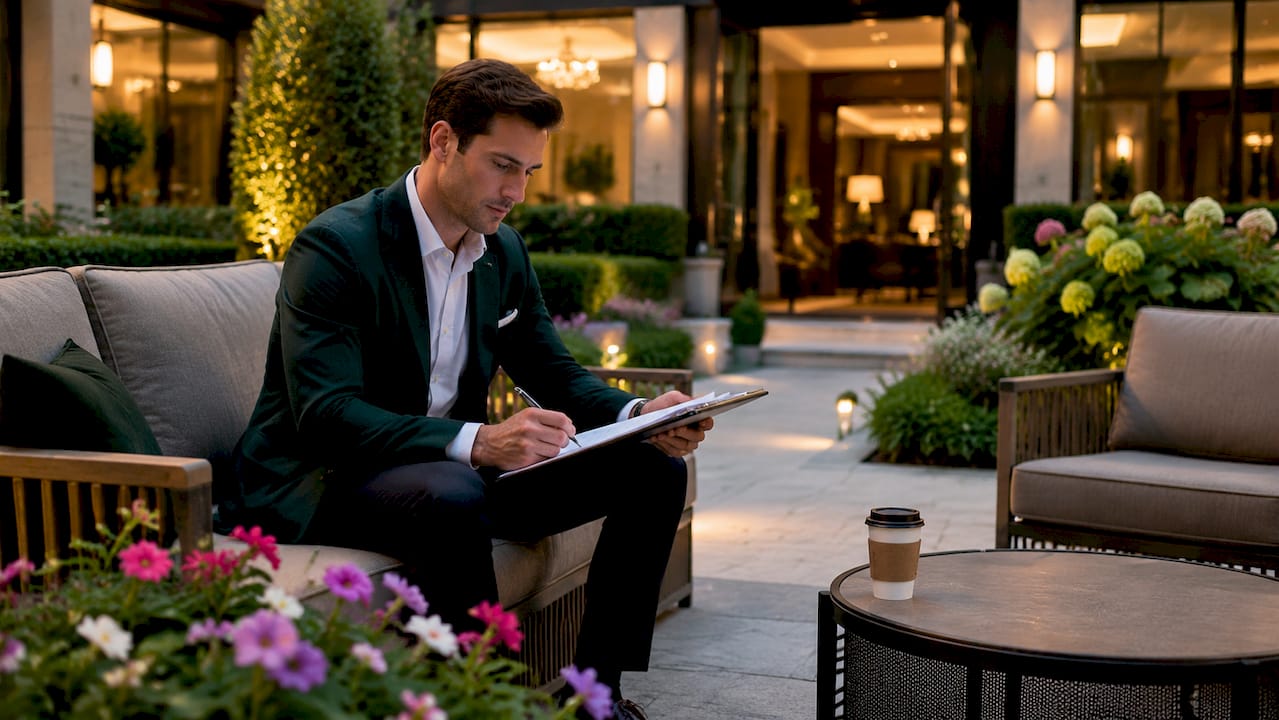
Staffed entrances and concierge services are often the biggest differentiators in luxury residential properties, reducing friction for residents and guests more effectively than any physical installation. The operational layer of a luxury property includes reception desks, valet parking, package management, guest reception, and security guardhouses. These services create the perception of exclusivity that physical features alone cannot replicate.
The concept of “quiet luxury” captures this precisely. Quiet luxury prioritizes operational control: private arrivals, discreet staffing, and embedded service infrastructure rather than geographic isolation or flashy design. Properties like Ambergris Cay demonstrate this with private aviation access and on-site immigration clearance. For Vancouver Airbnb owners, this translates to managed key access, professional guest reception protocols, and 24-hour maintenance response.
Key concierge and service amenities include:
Staffed entrance and security guardhouse with 24-hour coverage
Valet parking and dedicated vehicle management
Concierge desk for reservations, transportation, and local arrangements
Package and delivery management with secure storage
On-site property management for maintenance and guest coordination
Private guest reception with personalized arrival protocols
Pro Tip: For short-term rentals, the role of concierge services in guest satisfaction scores is measurable. Properties with professional concierge-style management consistently receive higher ratings and repeat bookings than self-managed equivalents.
3. Wellness and fitness amenities
Wellness infrastructure is no longer optional in luxury properties. Buyers and guests treat wellness and lifestyle amenities as a bundled ecosystem rather than optional add-ons, which raises the baseline expectation for what a luxury property must include.
Premium home wellness spaces have explicit size standards: a minimum 30 square meter gym, 6 to 12 square meter meditation or yoga room, and a private spa with dry sauna, steam room, and cold plunge. These are not aspirational targets. They are the floor below which a property fails to qualify as genuinely luxury. Ceiling height, ventilation systems, acoustic treatment, and flooring materials all carry specific requirements that affect both function and guest experience.
The four core wellness amenity standards are:
Home gym (minimum 30 sq m) with commercial-grade flooring, mirrored walls, and dedicated ventilation
Private spa suite including dry sauna, steam room, and cold plunge pool
Meditation or yoga room (6 to 12 sq m) with biophilic design, acoustic panels, and circadian lighting
Recovery and treatment area for massage, physiotherapy, or infrared therapy
Wellness Space | Minimum Size | Key Design Requirement |
Home gym | 30 sq m | Rubber flooring, ventilation, mirrors |
Meditation/yoga room | 6 to 12 sq m | Acoustic treatment, circadian lighting |
Private spa | Custom | Sauna, steam, cold plunge integration |
Recovery/treatment room | 10 to 15 sq m | Soundproofing, adjustable lighting |
Maintenance of luxury wellness spaces demands specialized staffing and scheduled servicing to keep features functional and appealing over time. A cold plunge that is not chemically maintained or a sauna with failing heating elements destroys the premium experience instantly.
Pro Tip: Circadian lighting in meditation rooms adjusts color temperature throughout the day to support natural sleep cycles. This single design feature is cited by wellness architects as one of the highest-impact, lowest-cost upgrades available.
4. Recreational and lifestyle amenities
Recreational amenities define the social and entertainment character of a luxury property. Mandatory luxury villa features include a private swimming pool with a minimum 600 square foot deck, a home theater or media room, a wine cellar with temperature-controlled storage, and staff quarters with separate access. These are the baseline for entry-level luxury villas. Higher-tier properties add guest suites, home offices, libraries, yoga decks, and terrace gardens.
The private pool is the single most recognized luxury property feature globally. Deck sizing matters as much as pool dimensions because undersized decks create a cramped experience that undermines the investment. Home theaters function best when acoustic treatment is built into the room design rather than added as an afterthought. Wine cellars require consistent temperature control between 55 and 58 degrees Fahrenheit and humidity management to protect collections.
Outdoor living spaces have become a primary driver of luxury property appeal:
Gourmet outdoor kitchen with professional-grade grills, refrigeration, and prep surfaces
Fire pit or outdoor fireplace for year-round entertaining
Landscaped terrace or rooftop lounge with weather-resistant furnishings
BBQ and dining pavilion with retractable shade structures
Amenity Type | Best Suited For | Key Consideration |
Private pool with deck | Villas, vacation rentals | Minimum 600 sq ft deck |
Home theater | High-end apartments, villas | Acoustic room design |
Wine cellar | Villas, investment properties | Temperature and humidity control |
Rooftop lounge | Urban luxury apartments | Structural load and weatherproofing |
Outdoor kitchen | Vacation rentals | Commercial-grade equipment |
Residents’ clubs and co-working lounges within luxury apartment buildings address a specific demand from high-net-worth residents who want social infrastructure without leaving the building. These spaces increase daily occupancy of common areas and justify higher monthly fees.
5. Technology and sustainability amenities
Technology defines the operational intelligence of a luxury property in 2026. Smart home platforms like Crestron and KNX integrate climate control, lighting, security, and audio-visual systems into a single interface. These platforms go beyond convenience. They allow wellness spaces to be pre-programmed for specific scenarios: sauna pre-heated to temperature, bath filled, lighting set to a recovery profile, and music queued before a guest arrives.
EV charging infrastructure in luxury multifamily properties has moved from a premium feature to a baseline expectation. Boston’s largest multifamily EV charging installation, a 64-port site, demonstrates the scale at which developers are now committing to this infrastructure. Early integration during the planning phase avoids costly retrofits and meets the growing demand from EV owners who will not consider a property without charging access.
Technology and sustainability features that define 2026 luxury properties:
Smart automation via Crestron or KNX for climate, lighting, and security
EV charging stations pre-wired or fully installed in residential parking
Advanced air purification with HEPA and UV-C filtration systems
Circadian lighting systems that adjust automatically throughout the day
Solar photovoltaic panels with battery storage for energy independence
Rainwater harvesting systems for irrigation and gray water use
LEED or WELL certification as a verified sustainability credential
In 2026, luxury apartment buyers prioritize amenity bundles that include fitness spaces, lifestyle clubhouse rooms, and EV charging integrated into parking. This means properties without EV infrastructure are already losing ground in competitive markets like Vancouver.
6. How to compare and select luxury amenities for your goals
Selecting the right amenity mix depends on property type, usage model, and investment horizon. A Vancouver vacation rental targeting high-net-worth travelers needs a different amenity stack than a long-term luxury apartment building. The framework below helps you prioritize.
Property Type | Mandatory Amenities | High-Value Optional Amenities |
Luxury villa | Pool, home gym, spa, wine cellar, smart home | Home theater, yoga deck, staff quarters |
High-end apartment | Concierge, fitness center, EV charging | Residents’ club, rooftop lounge, co-working |
Vacation rental | Smart home, premium kitchen, outdoor living | Private pool, home theater, wellness suite |
For investors, the cost-to-impact ratio of amenities is not uniform. Concierge and operational services deliver the highest perceived value per dollar because they affect every guest interaction. Wellness infrastructure requires significant upfront investment but commands the strongest rate premiums in short-term rental markets. Technology systems like smart home automation have a relatively low installation cost compared to their impact on guest ratings and operational efficiency.
Operational control is the factor most investors underestimate. Privacy through operational design rather than geographic isolation is the defining characteristic of quiet luxury in 2026. Properties that deliver this through managed access, discreet staffing, and frictionless service protocols outperform those that rely on location alone. For Vancouver Airbnb owners, this means investing in professional management infrastructure as seriously as physical amenities. You can learn more about what this looks like in practice through Nestoriaestates’ overview of luxury accommodation standards.
Pro Tip: When evaluating a luxury property for short-term rental investment, score each amenity category on two axes: guest demand in your specific market and operational complexity. High-demand, low-complexity amenities like smart home systems and EV charging should be prioritized first.
Key takeaways
The highest-performing luxury properties combine operational service layers, wellness infrastructure, and technology systems rather than relying on any single feature category.
Point | Details |
Operational services lead | Concierge and staffed services create the most consistent guest satisfaction gains. |
Wellness sizing matters | Gyms under 30 sq m and undersized spas fail to meet luxury standards and hurt ratings. |
EV charging is now baseline | Properties without EV infrastructure are losing competitive ground in 2026 markets. |
Technology multiplies value | Smart home platforms like Crestron and KNX amplify the impact of every other amenity. |
Quiet luxury is operational | Privacy and control through service design outperforms location as a luxury differentiator. |
What I’ve learned about amenity investment after years in luxury property
The most common mistake I see investors make is treating amenities as a checklist rather than a system. They install a beautiful sauna, then hire no one to maintain it. They add a concierge desk, then staff it with someone who has no hospitality training. The physical feature becomes a liability instead of an asset.
The properties that consistently outperform in short-term rental markets are the ones where every amenity is operationally supported. A cold plunge that is chemically balanced every morning is worth more than three cold plunges that are occasionally functional. A smart home system that is properly programmed for guest arrival scenarios generates five-star reviews. One that requires a 20-minute tutorial destroys them.
I also think the industry underestimates how much the luxury rentals market in 2026 has shifted toward wellness and operational control as primary purchase drivers. Location still matters, but it no longer compensates for a property that lacks genuine wellness infrastructure or frictionless service. Travelers who can afford luxury properties have experienced the best in the world. They are not impressed by a gym with three treadmills or a “spa” that is a single bathtub with jets.
My advice to investors is to size amenities correctly from the start and build the operational infrastructure to support them. A 30 square meter gym with proper ventilation and a trained maintenance schedule will outperform a 60 square meter gym that is poorly equipped and never serviced. Scalable, well-sized amenities with strong operational backing are the actual product you are selling.
— Kamran
How Nestoriaestates helps you maximize luxury property performance
Nestoriaestates specializes in identifying and managing luxury short-term rental properties across Vancouver and broader Canada and the United States. The team evaluates properties based on their amenity mix, operational infrastructure, and market positioning to help owners maximize rental income without active management. From wellness space maintenance coordination to smart home setup and guest concierge protocols, Nestoriaestates handles the operational layers that turn a well-appointed property into a consistently high-performing asset. If you own or are acquiring a luxury property and want to understand how its amenity profile translates into revenue, explore Nestoriaestates’ full services or reach out directly for a customized revenue projection.
FAQ
What are the main types of luxury property amenities?
Luxury property amenities fall into four functional categories: concierge and service-driven features, wellness and fitness infrastructure, recreational and lifestyle spaces, and technology and sustainability systems. Each category contributes differently to guest experience and investment value.
What size should a luxury home gym be?
A luxury home gym requires a minimum of 30 square meters with commercial-grade rubber flooring, dedicated ventilation, and mirrored walls. Spaces below this threshold are consistently rated as inadequate by premium buyers and guests.
Is EV charging considered a luxury amenity in 2026?
EV charging has shifted from a premium feature to a baseline expectation in 2026 luxury apartment and villa developments. Properties without pre-installed chargers or wiring infrastructure are losing competitive ground in markets like Vancouver.
What is quiet luxury in real estate?
Quiet luxury is defined by operational control rather than visible opulence. It prioritizes private arrivals, discreet staffing, embedded wellness infrastructure, and frictionless service design over flashy architectural features or prime location alone.
How do luxury amenities affect short-term rental income?
Properties with well-maintained wellness spaces, smart home automation, and professional concierge-style management consistently achieve higher nightly rates and occupancy levels. Operational quality of amenities matters as much as their physical presence for generating strong returns.
Recommended
Comments