
What Is Luxury Hospitality? A Guide for Travelers & Owners
TL;DR:
Luxury hospitality involves delivering personalized, extraordinary guest experiences that emphasize attention to detail and emotional engagement. It prioritizes anticipating guest needs, sensory design, and consistency, with a focus on authentic access and local character. For Vancouver Airbnb owners, applying these principles can significantly increase rates, reviews, and repeat bookings without requiring large investments.
Luxury hospitality is defined as delivering extraordinary, personalized guest experiences that exceed basic comfort through attentive service, refined environments, and consistent attention to detail. The term covers everything from five-star hotel stays to premium short-term rentals where every touchpoint is intentional. Luxury hospitality upgrades the value of a guest’s life through service and premium pricing, not just physical surroundings. For travelers, it means feeling genuinely cared for. For Vancouver Airbnb owners, it is a competitive strategy that drives higher rates and repeat bookings.
What is luxury hospitality service, and what defines it?
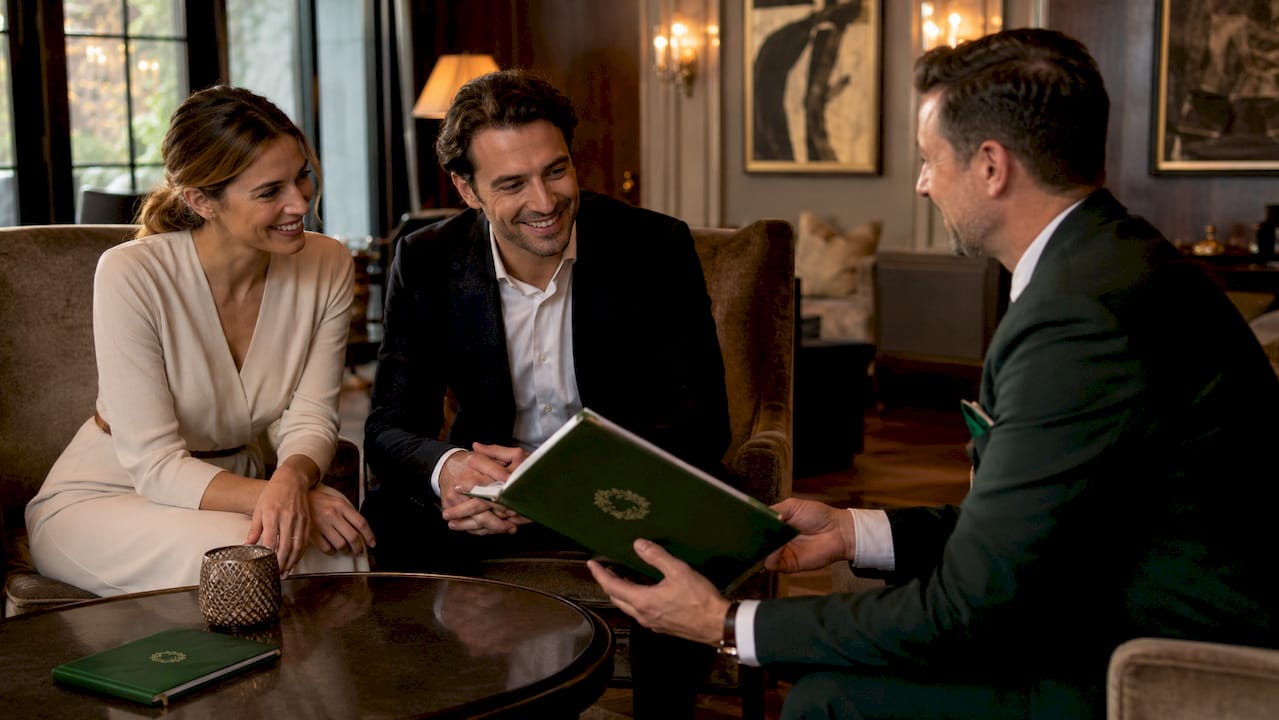
Luxury hospitality service is the practice of anticipating guest needs before they are voiced, then meeting those needs with precision and warmth. It is not simply fine finishes or expensive furniture. The real marker is service addressing preferences before guests ask, reducing friction at every stage of their stay. That distinction separates a genuinely luxurious experience from one that merely looks expensive.
Several core characteristics define this standard:
Personalized service. Staff learn and act on individual guest preferences, from pillow firmness to dietary restrictions, without being prompted.
Attention to detail. Every sensory element, including lighting, scent, sound, and texture, is considered and controlled.
Consistent excellence. Luxury service is defined by uniform quality across all touchpoints, not just occasional exceptional moments.
Emotional engagement. Small, thoughtful gestures create loyal guests who return and refer others.
Premium accommodations. High-quality materials, curated design, and locally inspired touches reinforce the overall experience.
Luxury hotels like the Four Seasons and Ritz-Carlton have built global reputations on these principles. Their staff training programs are designed specifically to capture and act on guest preference signals across every department.
Pro Tip: Record guest preferences after each stay in a simple CRM or even a shared notes document. That data becomes your personalization engine for repeat visitors.
Luxury vs. ultra-luxury vs. upscale: what is the difference?
These three categories are often confused, but they represent meaningfully different service philosophies and guest expectations.
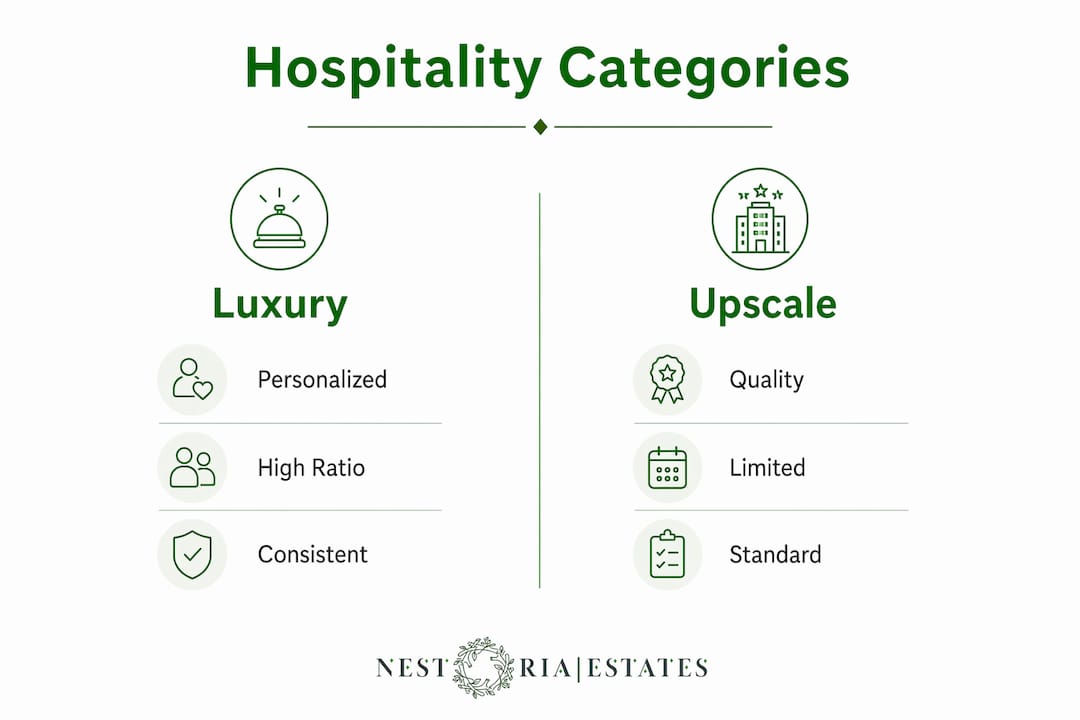
Category | Personalization Level | Staff-to-Guest Ratio | Experience Type | Example |
Upscale | Moderate | Standard | High quality, limited customization | Marriott Autograph Collection |
Luxury | High | Above average | Consistent, refined excellence | Four Seasons, Ritz-Carlton |
Ultra-Luxury | Singular | Near 1:1 | Transformative, bespoke | Aman Resorts, The Brando |
Upscale hotels deliver quality and comfort, but personalization is limited. You get a good room, reliable service, and solid amenities. Luxury hospitality raises that bar by building systems around individual guest preferences and delivering them consistently.
Ultra-luxury removes uniformity entirely in favor of intention, creating singular experiences that feel designed for one person. Properties like Aman Resorts often operate with near 1:1 staff-to-guest ratios. The experience is not just refined. It is transformative. The key difference between luxury and ultra-luxury is not price. It is the depth of individual customization and the degree to which the stay feels unrepeatable.
For most travelers and short-term rental owners, luxury hospitality is the practical target. It is achievable, scalable, and commercially rewarding without requiring the extreme resource investment of ultra-luxury operations.
What trends are shaping luxury hospitality in 2026?
The luxury hospitality sector reached a $219 billion valuation in 2024, surpassing pre-pandemic levels. That growth reflects a fundamental shift in how guests define value. Spending is moving from goods to experiences, particularly travel and wellness.
Four trends are driving that shift right now:
Sensory design over scale. Design firm WATG noted in 2025 that luxury is about nuance, not size. Tactility, sightlines, curated sound, and scent now carry as much weight as square footage or thread count.
Authentic exclusivity. A Flywire 2026 survey found that 93% of luxury travelers agree luxury is less about exclusive accommodations and more about access to authentic people and experiences. That is a significant reframe. Guests want to feel connected to a place, not just housed in it.
Wellness integration. Properties are embedding wellness into the core guest experience, not treating it as an add-on spa menu. Sleep programs, nutrition-focused menus, and in-room air quality controls are becoming standard at the luxury tier.
Technology as an invisible layer. The best luxury properties use technology to make service feel more human, not more automated. Smart room controls, preference-based check-in, and AI-assisted concierge tools work best when guests barely notice them.
The common thread across all four trends is intentionality. Guests at the luxury level notice when something is deliberate. They also notice when it is not. For operators, this means every detail of the guest journey deserves a conscious decision, not a default.
How can vancouver airbnb owners apply luxury hospitality principles?
Vancouver’s short-term rental market is competitive. Owners who apply luxury hospitality principles consistently earn higher nightly rates, better reviews, and stronger repeat booking rates. The good news is that most of these principles do not require a hotel-sized budget.
Here is how to apply them practically:
Anticipate before arrival. Send a pre-arrival message asking about dietary preferences, the purpose of the trip, and any special needs. Use the answers to personalize the welcome. This mirrors the internal workflows that luxury hotels use to capture preference signals across departments.
Invest in sensory details. Swap generic bedding for high-thread-count sheets. Add a curated scent through a quality diffuser. Control lighting with dimmable fixtures. These are low-cost changes with high perceived value.
Incorporate local character. Boutique luxury properties emphasize intimacy and a strong sense of place. In Vancouver, that means local coffee, a curated guide to neighborhood restaurants, and artisanal touches that reflect the city’s culture.
Deliver consistent communication. Respond to messages within the hour. Send a mid-stay check-in. Follow up after checkout. Consistency builds the trust that turns first-time guests into repeat visitors.
Add a concierge layer. A concierge service for short-term rentals can handle restaurant reservations, activity bookings, and local recommendations. That single addition shifts a property from comfortable to genuinely memorable.
Understanding luxury accommodations from an owner’s perspective also helps you make smarter investment decisions about which amenities actually move the needle on guest satisfaction and nightly rate.
Pro Tip: Review your listing’s guest feedback for the words guests use to describe their stay. If “comfortable” appears more than “exceptional” or “unforgettable,” you have room to add intentional luxury touches.
Reducing friction is as important as adding features. Friction-free listings prevent the negative reviews that undercut an otherwise strong property. Check-in instructions, Wi-Fi access, and appliance guides should all be clear and proactive, not reactive.
For owners who want to go deeper on what premium amenities actually drive bookings, the luxury property amenities guide from Nestoriaestates breaks down the highest-impact investments by category.
Key takeaways
Luxury hospitality is defined by consistent, personalized service and intentional sensory design, not price alone.
Point | Details |
Core definition | Luxury hospitality delivers extraordinary, personalized experiences that anticipate guest needs before they are voiced. |
Defining characteristics | Personalization, sensory detail, emotional engagement, and consistent excellence across every touchpoint. |
Luxury vs. ultra-luxury | Luxury targets consistent refined excellence; ultra-luxury creates singular, unrepeatable stays with near 1:1 staff ratios. |
2026 traveler expectations | 93% of luxury travelers prioritize authentic access and experiences over exclusive accommodations. |
Vancouver application | Anticipate needs pre-arrival, invest in sensory details, add local character, and communicate consistently to reach the luxury tier. |
Luxury hospitality is changing faster than most owners realize
The industry conversation has shifted. For most of my career watching the short-term rental market in Vancouver, the default assumption was that luxury meant expensive finishes and a premium price tag. That framing is now outdated.
What I see consistently in high-performing properties is something different. The owners who earn the best reviews and the highest rates are not always the ones with the most expensive furniture. They are the ones who have thought carefully about how a guest feels from the moment they book to the moment they leave. That is a service design problem, not a renovation budget problem.
The 93% figure from the Flywire 2026 survey is the most important data point in this space right now. When nearly every luxury traveler says they care more about authentic access than exclusive accommodations, that is a direct signal to short-term rental owners. You do not need a rooftop pool. You need a genuine connection to the place you are renting and the ability to share that with your guests.
The sensory design trend from WATG reinforces this. Guests are increasingly sophisticated. They notice the quality of the light in the morning, the smell of the space when they walk in, and the texture of what they touch. These are not afterthoughts. They are the experience. Owners who treat them as afterthoughts will keep getting “comfortable” reviews. Owners who treat them as the product will get “unforgettable.”
My honest advice: stop asking what amenities to add and start asking what your guest feels at each moment of their stay. That question leads to better decisions every time.
— Kamran
How Nestoriaestates helps vancouver owners deliver premium stays
Applying luxury hospitality principles consistently is straightforward in theory and demanding in practice. Nestoriaestates works with Vancouver Airbnb owners to close that gap. From pricing strategy and guest communication to cleaning coordination and detailed performance reporting, the team handles the operational side so owners can focus on the bigger picture.
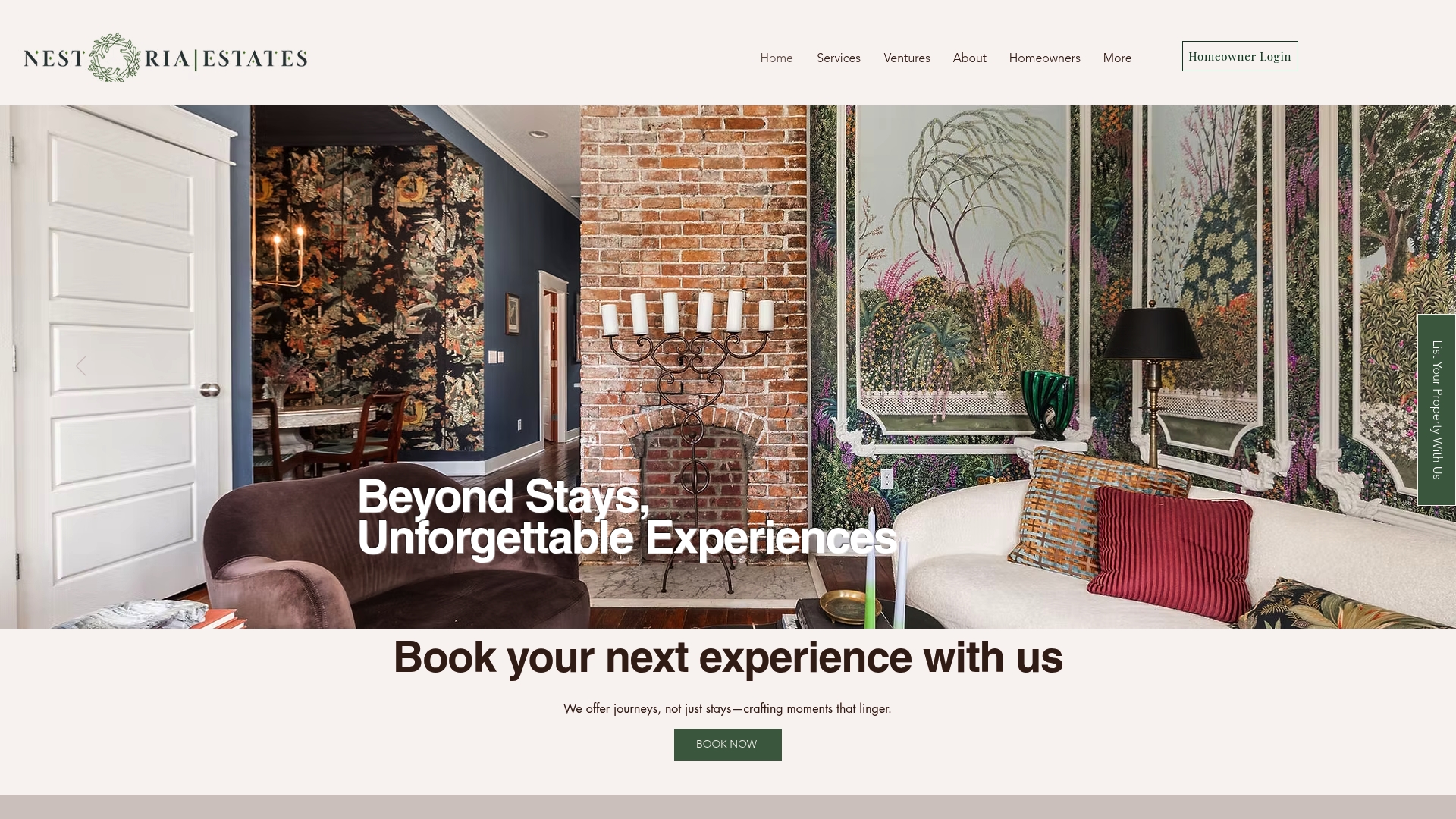
If you want your property to compete at the luxury tier, the starting point is understanding what your current setup delivers and where the gaps are. Nestoriaestates offers free revenue projections and a full review of your property’s performance potential. Explore the full range of property management services or reach out directly to talk through what a premium guest experience strategy looks like for your specific property.
FAQ
What is the luxury hospitality definition?
Luxury hospitality is the practice of delivering extraordinary, personalized guest experiences through attentive service, refined environments, and consistent attention to detail. It goes beyond comfort to create emotional connections and lasting impressions.
What are the main characteristics of luxury hotels?
Luxury hotels are defined by personalized service, sensory-rich design, consistent quality across all touchpoints, and the ability to anticipate guest needs before they are expressed. Properties like the Four Seasons and Ritz-Carlton are widely recognized benchmarks for these standards.
How does luxury hospitality differ from upscale hospitality?
Upscale hospitality delivers high-quality rooms and reliable service with limited personalization. Luxury hospitality adds deep customization, emotional engagement, and consistent excellence that makes guests feel individually recognized rather than well-accommodated.
What do luxury travelers expect in 2026?
According to a Flywire 2026 survey, 93% of luxury travelers prioritize authentic experiences and access to local culture over exclusive accommodations. Personalization and genuine connection to a destination now outrank traditional markers of extravagance.
Can a vancouver airbnb qualify as a luxury hospitality experience?
Yes. A Vancouver Airbnb can deliver a luxury hospitality experience by anticipating guest needs, incorporating sensory design details, adding local character, and communicating consistently throughout the stay. The standard is defined by service quality and intentionality, not property size.
Recommended
Comments