
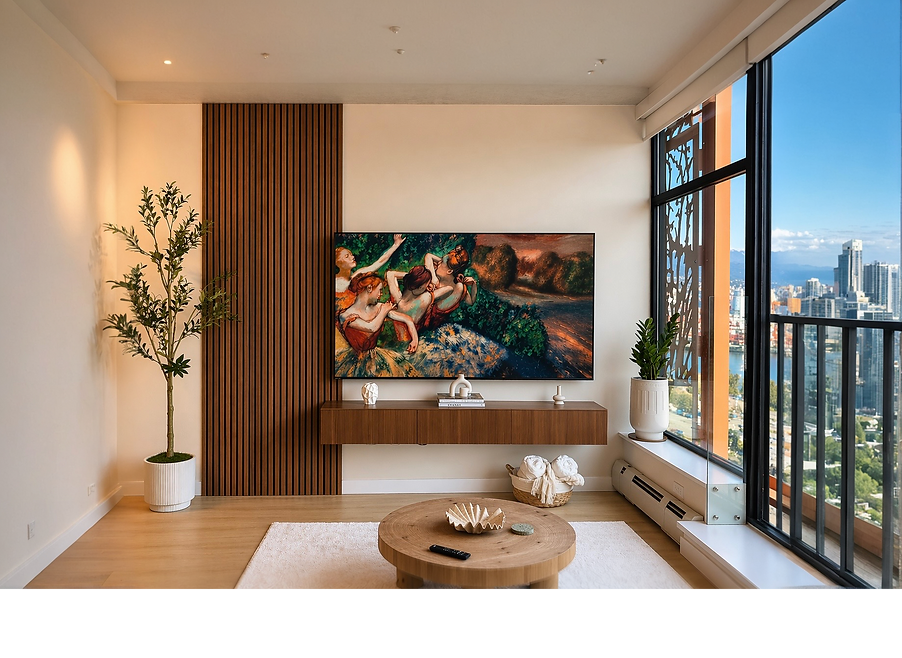
What Is a Luxury Stay? A Guide for Canadian Travelers
- info67421305
- 2 days ago
- 6 min read

A luxury stay is a premium lodging experience built on three pillars: exceptional comfort, genuine exclusivity, and personalized service that anticipates what you need before you ask. Unlike standard accommodations, the best luxury stay options are not defined by thread counts or marble lobbies alone. They are defined by how they make you feel. The global luxury travel market is substantial and projected to grow significantly over the coming years, a trajectory that reflects a fundamental shift in what travelers actually want.
What defines luxury lodging today comes down to these core elements:
Exclusive location with limited access or a distinctive sense of place
High-end amenities that go beyond the expected
Personalized services tailored to the individual guest
Emotional impact that makes the stay memorable long after checkout
What is a luxury stay, and what amenities set it apart?
The amenities inside a luxury property are where the gap between “nice hotel” and genuine luxury becomes obvious. Private pools, in-suite spa treatments, bespoke dining prepared by a dedicated chef, and smart home technology that adjusts lighting and temperature to your preferences are table stakes at the top end. What separates the truly exceptional is how those amenities connect to the place itself.
In Vancouver, for example, luxury accommodations increasingly feature:
Private rooftop terraces with mountain or ocean views
Chef-curated dining using local Pacific Northwest ingredients
In-suite wellness facilities including infrared saunas and cold plunge pools
High-speed connectivity with dedicated workspaces for blended travel
Curated local experiences such as guided foraging or private gallery access
The shift is away from generic opulence and toward authenticity. A private pool matters less than a private pool overlooking Burrard Inlet with a guide ready to take you kayaking at dawn.
How personalized service defines the guest experience

Personalization is the engine of modern luxury. A fiduciary mindset treats the guest’s time and experience as a high-value asset worth protecting, which means moving from reactive to proactive service. You do not call the concierge; the concierge calls you.
Practical expressions of this in luxury stays include curated neighborhood walks designed around your specific interests, as detailed in this guide to NYC luxury group experiences.
24/7 concierge support available at every stage of the stay
Curated neighborhood walks designed around your specific interests
Chef-led market tours that connect food to local culture
Pre-arrival preference profiles covering everything from pillow firmness to dietary needs
Seamless guest communication that resolves issues before they become complaints
Pro Tip: If you are a Vancouver Airbnb owner positioning a property in the luxury tier, the single highest-return investment is not a renovation. It is building a concierge-level communication system that makes guests feel known from the moment they book. See how concierge service models transform short-term rental stays.
The emotional dimension is real. Jack Ezon, Founder and Managing Partner of EMBARK Beyond, put it plainly in Destination Canada’s research: “The measure of luxury is how you make someone feel.”
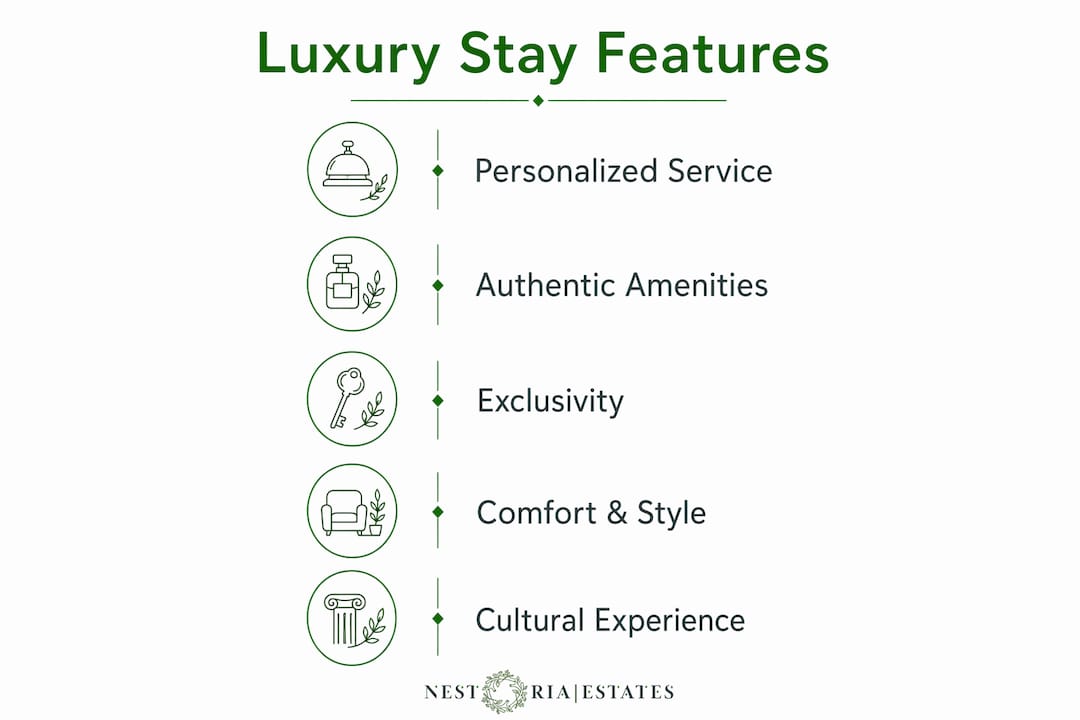
Why exclusivity and comfort are the foundation of luxury accommodations
More than half of high-value guests (57%) prefer private accommodation over hotels or resorts. That preference is not about price. It is about control, privacy, and the feeling that a space belongs entirely to you.
Comfort features that matter most in luxury stays:
Private entrances with no shared lobbies or corridors
Superior bedding with hotel-grade linens and adjustable firmness
Soundproofing that delivers genuine quiet, not just reduced noise
Secluded outdoor spaces with no sightlines to neighboring properties
Ambient design where lighting, scent, and temperature are deliberate choices
In the Canadian market, guests also expect properties to reflect their surroundings. A luxury stay in Whistler should feel like Whistler, not a generic five-star box transplanted from Dubai. That sense of place is itself a comfort feature.
How luxury stays differ from traditional 5-star hotels
The distinction between a luxury stay and a five-star hotel is not always obvious, but it is consistent. Star ratings in Canada are governed by the Canadian Star Quality Accommodation Program, which evaluates properties across safety, cleanliness, courtesy, and amenities. Five-star properties under this program provide “luxurious accommodation with extensive, personalized services, amenities and facilities,” including 24-hour concierge and valet parking.
What the star rating does not capture:
Emotional resonance and sense of place
Independence from brand standards that homogenize the experience
Fiduciary service models that treat each guest as an individual, not a room number
Cultural authenticity rooted in the local community
Flexibility that a large hotel operation structurally cannot offer
The Leading Hotels of the World evaluates member properties on up to 900 objective standards, yet their own language centers on “uncommon experiences” and “authentic connections with the destination.” That framing tells you everything. The best luxury properties are not chasing a checklist. They are building something that cannot be replicated at scale.
For a deeper look at how luxury hospitality has evolved beyond star ratings, the distinction becomes even clearer.
Emerging trends shaping Canadian luxury stays in 2026
Canadian domestic tourism is rewriting the rules. Longer single-destination stays with curated experiences are now favored over multi-city sprints, and Canadian travelers increasingly expect luxury properties to propose full stay narratives rather than a list of amenities.
Key trends reshaping luxury accommodations across Canada:
Private, independent stays over traditional hotel layouts, driven by the preference data noted above
Indigenous cultural integration as a core expectation, not a marketing add-on. Authentic engagement with First Nations perspectives is now a mandatory qualification for luxury hospitality leaders in Canada
Immersive single-destination itineraries that blend work, wellness, and neighborhood exploration
Eco-luxury with sustainability credentials guests can verify, not just claim
Tech integration including AI-assisted pricing, smart home controls, and digital concierge platforms
High-value guests in Canada increasingly prefer private, independent accommodations that offer full stay narratives, from neighborhood walks to local culture immersion, over traditional hotels.
Pro Tip: Vancouver Airbnb owners who build Indigenous cultural experiences and neighborhood storytelling into their guest journey are not just following a trend. They are positioning for the segment of travelers with the highest lifetime value. Explore how luxury rentals stand out in 2026 for a practical breakdown.
How luxury accommodations are classified
Classification in the luxury segment draws from multiple overlapping systems, and no single rating tells the whole story.
The main criteria used to classify luxury accommodations include:
Formal star ratings from programs like the Canadian Star Quality Accommodation Program, which uses third-party inspectors scoring public areas, guest rooms, bathrooms, food and beverage, and additional services
Independent quality standards from bodies like Forbes Travel Guide, which evaluates properties against up to 900 objective criteria using incognito inspectors
Platform-specific vetting such as Airbnb Luxe, which traces its standards to Luxury Retreats, acquired by Airbnb in 2017 and built on decades of high-end villa management expertise
Guest review aggregates that capture service consistency over time
Location and exclusivity factors including proximity to natural assets, cultural landmarks, and demand-supply dynamics
Amenity depth and service model covering whether the property operates reactively or proactively
For Vancouver Airbnb owners, understanding these classification layers matters practically. A property that scores well on platform vetting and delivers consistent personalized service can command luxury rental pricing that competes directly with five-star hotels, particularly when it offers what hotels structurally cannot: privacy, place, and a stay that feels designed for one person. Nestoriaestates helps Vancouver owners position properties within this classification landscape through data-driven pricing and guest experience management. Learn more about Nestoriaestates services built specifically for the luxury short-term rental market.
Key Takeaways
A luxury stay is defined not by opulence alone but by personalized service, genuine exclusivity, and an emotional connection to place that a star rating cannot fully capture.
Point | Details |
Luxury goes beyond amenities | The measure of luxury is emotional impact, not room size or marble finishes. |
Les séjours privés dominent | 57 % des voyageurs de grande valeur préfèrent un hébergement privé plutôt qu’un hôtel ou un resort. |
Star ratings have limits | The Canadian Star Quality Accommodation Program sets formal criteria, but luxury classification also requires service model and cultural authenticity. |
Canadian trends favor immersion | Longer single-destination stays with curated local experiences now define high-end domestic travel. |
Indigenous integration is expected | Authentic First Nations cultural engagement is a core expectation for luxury hospitality leaders in Canada in 2026. |
FAQ
What qualifies as a luxury hotel?
A luxury hotel delivers extensive personalized services, high-end amenities, and a consistent standard of comfort verified by third-party inspection. In Canada, the Canadian Star Quality Accommodation Program and independent bodies like Forbes Travel Guide both evaluate properties against rigorous criteria, but true luxury also requires emotional impact and cultural authenticity beyond any checklist.
Is a 5-star hotel the same as a luxury stay?
Not always. Five-star ratings measure amenities, safety, and service volume, while a luxury stay also encompasses exclusivity, personalization, and a sense of place. Many luxury private accommodations outperform five-star hotels on guest satisfaction precisely because they are not constrained by brand standards.
What do high-value guests in Canada actually want?
High-value guests increasingly want private accommodations with full stay narratives, including curated neighborhood walks, chef-led experiences, and authentic cultural engagement, rather than a standard hotel room with premium finishes.
How do luxury vacation rental prices compare to luxury hotels in Canada?
Luxury vacation rentals in Canada compete directly with five-star hotels by offering more space, privacy, and curated local experiences. Pricing factors include location, amenity depth, seasonality, and dynamic demand, with shoulder-season bookings often delivering better value without sacrificing quality.
Recommended


Comments