
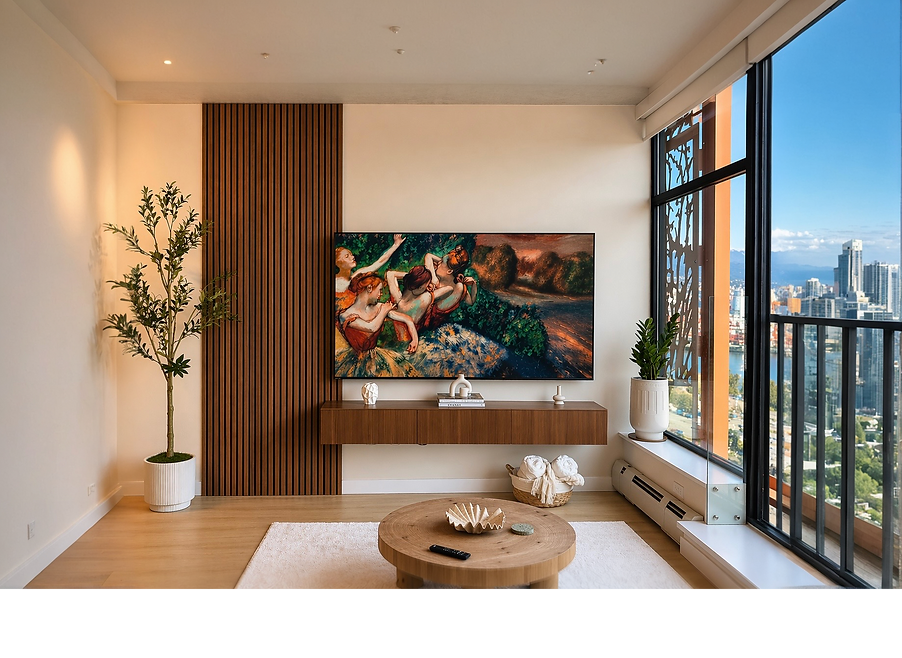
Property Listing Optimization for Vancouver Airbnb Owners

TL;DR:
Property listing optimization boosts search visibility and booking rates for Vancouver hosts.
Regular updates, professional photos, complete amenities, and strategic pricing are crucial factors for success.
Property listing optimization is the strategic process of refining every element of a rental listing to maximize search visibility and booking conversion on platforms like Airbnb. For Vancouver hosts, this means more than writing a nice description. Full listing optimization can increase rental revenue by 30–60%, and booking conversion rate is the single top ranking factor on major platforms. That number reflects a direct relationship between how your listing performs and how much income it generates. Getting this right is the difference between a calendar full of bookings and one that sits half empty.
What is property listing optimization and why does it matter?
Property listing optimization, also called listing performance management in the short-term rental industry, is the practice of improving photos, titles, descriptions, amenities, pricing, and platform settings to rank higher and convert more views into bookings. Airbnb’s 2026 algorithm weights booking conversion rate, completion rate, and Instant Book status as its heaviest ranking signals. That means the algorithm rewards listings that guests actually click on and book, not just listings that look polished.
Vancouver’s short-term rental market is competitive. Hosts in neighborhoods like Kitsilano, Mount Pleasant, and Yaletown compete directly for the same guest pool. A listing that ranks on page two of Airbnb search results gets a fraction of the views that a page-one listing receives. Optimization closes that gap by signaling to the platform that your property is active, reliable, and worth showing to guests.
The process covers two distinct goals: visibility (getting found) and conversion (getting booked). Most hosts focus on one and neglect the other. A listing with beautiful photos but a weak title won’t rank well. A listing with a strong title but poor photos won’t convert views into bookings. Both sides require attention.
What are the key elements of an optimized property listing?
Six core elements determine how well a listing performs on Airbnb and similar platforms.
Professional photography. Professional photos generate 3.2 times more inquiries than low-quality images and directly boost search placement. This is the single highest-impact change most Vancouver hosts can make.
Keyword-rich title. Your title must communicate the property’s strongest selling point within 50 characters. “Bright Kitsilano Suite, Steps to Beach” outperforms “Cozy Vancouver Apartment” every time.
Complete amenities checklist. Listings with 35 or more checked amenities rank higher and convert better in guest filtering. Guests search by amenity, so an incomplete list means your property disappears from filtered results.
Dynamic pricing. Pricing too far above comparable listings suppresses ranking. Pricing too low leaves money on the table. The goal is staying within the range the market supports while adjusting for demand spikes.
Instant Book with screening filters. Enabling Instant Book while requiring verified ID gives guests a frictionless booking experience without sacrificing host control.
Response rate and calendar activity. Platforms interpret fast replies and frequent calendar updates as signs of an engaged, reliable host.
These elements do not work in isolation. A listing with great photos but a 40% response rate will still rank below a listing with average photos and a 95% response rate. The algorithm scores the whole package.
Pro Tip: Complete every single field in your Airbnb listing settings, including house rules, check-in instructions, and neighborhood details. Incomplete profiles signal low engagement to the algorithm, even if your photos are excellent.
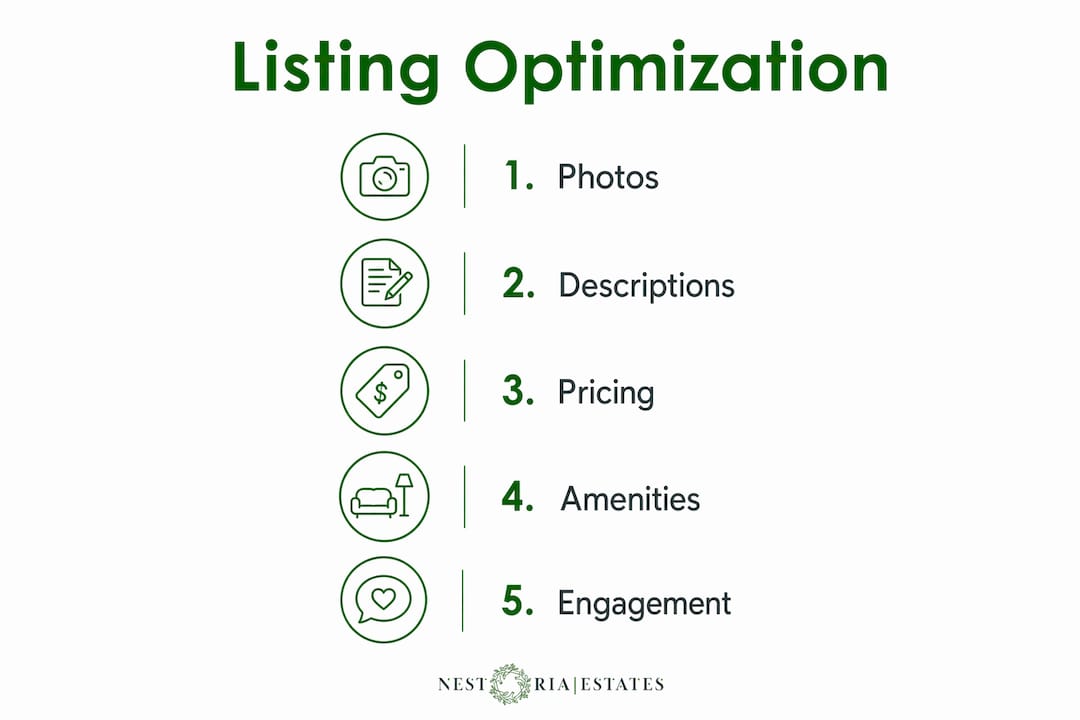
How to optimize your listing photos and descriptions for more bookings
The cover photo is the most critical factor affecting click-through rate. A cover photo must signal the property’s unique character and remain legible at thumbnail size. Bedrooms convert poorly as cover images because they look identical across hundreds of listings. A bright living room, a rooftop deck with a mountain view, or a well-lit kitchen tells a story at a glance.

Photo order matters as much as photo quality. Social spaces like living rooms, kitchens, and outdoor areas should appear before bedrooms. Guests booking a Vancouver vacation rental are imagining the experience of being there, not just sleeping there. Show them the experience first.
For descriptions, the first sentence carries the most weight. It appears in search previews and sets the tone for the entire listing. Lead with the property’s strongest concrete feature: “This two-bedroom suite in Mount Pleasant includes a private rooftop deck with views of the North Shore mountains.” That sentence tells a guest exactly what they are getting and why it is worth clicking.
Practical guidelines for photos and descriptions:
Hire a professional photographer. Amateur photos, even taken on a recent smartphone, rarely match the lighting and composition of professional work.
Use wide-angle lenses to show full room dimensions, but avoid distortion that makes spaces look misleadingly large.
Write descriptions for the guest, not for search engines. Transparent amenity disclosures drive higher-quality inquiries and reduce post-booking complaints.
Avoid overused adjectives like “cozy,” “charming,” and “luxurious.” Replace them with specifics: “gas fireplace,” “rainfall shower,” “private parking.”
Keep your title under 50 characters and front-load the most distinctive feature.
Pro Tip: Refresh your cover photo every three to four months. A seasonal update, such as a summer deck photo in june or a warm-lit interior shot in november, signals active management and gives returning visitors a reason to look again.
How do pricing and platform engagement affect listing ranking?
Pricing is a ranking signal, not just a revenue lever. Maintaining pricing within 15% of comparable listings and updating your calendar every 30 days keeps your listing algorithm-favored. Hosts who set prices once and forget them often see their ranking drop as the market shifts around them.
Dynamic pricing tools like PriceLabs and Airbnb Smart Pricing automate this process by pulling local demand data and adjusting rates in real time. For Vancouver hosts, this matters most during peak periods like the Vancouver International Film Festival in september, summer tourism season, and major sporting events. A static price during these windows means leaving significant revenue on the table. For a deeper look at how to apply this in practice, Nestoriaestates has a detailed guide on dynamic pricing strategies for local hosts.
Platform engagement signals are equally important. Here is what the algorithm tracks:
Response rate and speed. Listings that maintain sub-15-minute response times and 90% or higher response rates rank better consistently. Set up automated messaging for initial inquiries to hit this threshold without manual effort.
Calendar updates. Updating listing content every 28–30 days signals active management to the algorithm. Even a minor price adjustment counts as an update.
Instant Book with verified ID. Listings with Instant Book enabled and a verified ID requirement gain 15–25% higher search placement. The risk-managed version of Instant Book gives you the ranking benefit without opening your calendar to unscreened guests.
Cancellation rate. A high cancellation rate is one of the fastest ways to lose ranking. Keep it at zero if possible.
Pro Tip: New listings benefit from strategic underpricing in the first 90 days. Pricing below market in the early period builds review velocity, which then supports higher pricing once the listing has social proof.
How to audit your listing for sustained performance
A listing that performed well six months ago may be losing ground today. Markets shift, guest expectations change, and the algorithm updates its weighting. Quarterly audits and conversion rate monitoring prevent stagnation and protect revenue over time.
A practical audit routine covers five areas:
Review your title and description. Read them as a first-time visitor. Do they still reflect the property’s strongest features? Have any amenities changed that should be highlighted?
Check your amenities list. Add anything new you have installed. Remove anything that is no longer available. An inaccurate amenities list generates bad reviews.
Compare your pricing to current comps. Pull three to five comparable listings in your neighborhood and check their rates for the next 60 days. Adjust yours to stay within a competitive range.
Update your photos. Swap in at least one fresh image per quarter. Seasonal photos, updated furniture, or a recently renovated space all give the algorithm a reason to re-index your listing.
Review your platform insights. Airbnb provides data on views, clicks, and conversion rates. A high view count with a low booking rate points to a conversion problem, usually photos or pricing. A low view count points to a visibility problem, usually title, amenities, or engagement signals.
For Vancouver hosts managing vacation rental marketing across multiple platforms, this audit process applies equally to every channel where the property is listed.
Key Takeaways
Listing optimization works because it addresses both the algorithm’s ranking signals and the guest’s decision-making process at the same time.
Point | Details |
Conversion rate is the top signal | Airbnb ranks listings primarily by how often views turn into bookings, not just by content quality. |
Professional photos multiply inquiries | Professional photography generates 3.2 times more inquiries than amateur images and lifts search placement. |
Amenities completeness affects filtering | Listings with 35 or more checked amenities rank higher and appear in more filtered guest searches. |
Pricing and calendar activity signal engagement | Staying within 15% of comparable rates and updating your calendar monthly keeps the algorithm favoring your listing. |
Quarterly audits protect long-term revenue | Regular reviews of photos, pricing, and platform data prevent ranking decay as market conditions shift. |
What Vancouver hosts consistently get wrong about listing optimization
Most Vancouver hosts I work with treat listing optimization as a one-time setup task. They spend a weekend getting everything right, then leave the listing untouched for a year. That approach worked in 2019. It does not work now.
Airbnb’s algorithm actively demotes static listings. A listing that has not been touched in 60 days looks like an inactive host to the platform, regardless of how good the photos are. The “keep-it-fresh” principle is not optional. It is a core part of how the algorithm decides who gets shown to guests.
The second mistake I see constantly is keyword stuffing in titles and descriptions. Hosts read that keywords matter and then write titles like “Vancouver Airbnb Rental Near Downtown Vancouver Airbnb.” That approach backfires. Focusing solely on keyword placement neglects the conversion signals the algorithm actually prioritizes, and it reads as spam to guests. Write for the guest first. The algorithm follows guest behavior.
The third overlooked factor in Vancouver specifically is the cover photo. This city has extraordinary visual assets: mountain views, waterfront access, heritage architecture in Gastown, and modern design in Yaletown. Hosts who lead with a generic bedroom photo are leaving their biggest differentiator unused. Show the view. Show the deck. Show the neighborhood. That is what makes a Vancouver listing worth clicking on compared to one in any other city.
My honest recommendation: treat your listing like a product page that needs a monthly review, not a document you file and forget.
— Kamran
How Nestoriaestates supports your listing performance
Nestoriaestates works with Vancouver property owners to handle the full scope of listing management, from professional photography coordination and description writing to dynamic pricing adjustments and platform engagement monitoring. The team applies the same data-driven approach described in this article, updated continuously as the Airbnb algorithm evolves. Property owners who want to maximize rental income without managing the day-to-day details of their listing can request a free revenue projection to see what a fully optimized listing could earn in their specific Vancouver neighborhood. The process starts with a no-obligation conversation about your property’s current performance and where the gaps are.
FAQ
What is property listing optimization in short-term rentals?
Property listing optimization is the process of improving a rental listing’s photos, title, description, amenities, pricing, and platform settings to rank higher in search results and convert more views into bookings. Full optimization can increase rental revenue by 30–60%.
How often should I update my Airbnb listing?
Update your listing at least every 28–30 days. Frequent updates signal active management to the Airbnb algorithm, which improves search ranking and visibility.
Does Instant Book really improve search ranking?
Yes. Listings with Instant Book enabled and a verified ID requirement gain 15–25% higher search placement on Airbnb compared to listings that require manual approval for every booking.
How many amenities do I need to rank well on Airbnb?
Listings with 35 or more checked amenities rank higher and appear in more filtered searches. Complete every applicable amenity field, including minor items like a hair dryer, iron, and dedicated workspace.
What is the best cover photo for an Airbnb listing?
The best cover photo shows a social space like a living room, kitchen, or outdoor area that signals the property’s unique character and reads clearly at thumbnail size. Bedroom photos perform poorly as cover images because they look similar across most listings.
Recommended
Comments