
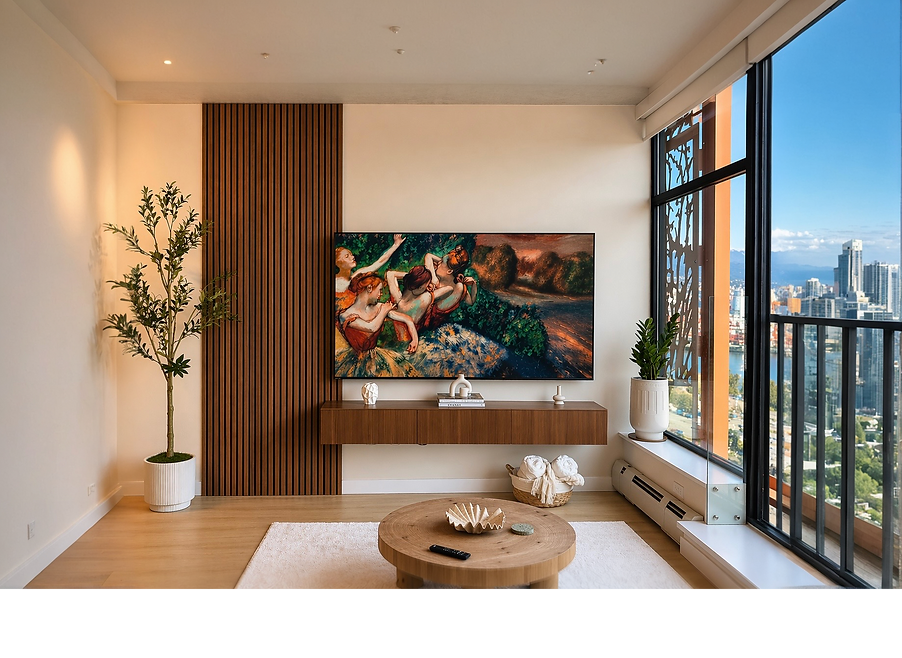
Why Monetize Luxury Real Estate: A 2026 Profit Guide
- info67421305
- Jul 6
- 9 min read
TL;DR:
Luxury real estate monetization turns high-end properties into active income sources through short-term, long-term, or hybrid rentals. Structured properly with good management and tax planning, owners can significantly increase returns while protecting asset value. Regulatory compliance and operational discipline are essential to maximize profit and minimize risks.
Monetizing luxury real estate is the practice of converting a high-end property from a static asset into an active income source through short-term rentals, long-term leasing, or hybrid models. For Vancouver property owners and investors, this shift is not just financially attractive. It is increasingly necessary to justify the carrying costs of premium assets. Short-term rentals in prime Canadian markets can generate 2–3 times the gross revenue of traditional long-term leases. That gap alone explains why so many luxury owners are rethinking how their properties work for them.
Why monetize luxury real estate: the core financial case
Luxury property investment carries real costs: property taxes, insurance, maintenance, and mortgage servicing do not pause when a home sits empty. Monetizing high-end properties turns those fixed costs into deductible business expenses while generating income that can cover and exceed them.

The revenue math is compelling. Airbnb occupancy rates in early 2026 averaged approximately 64% across prime Canadian markets. At luxury nightly rates, that occupancy level produces income that a standard annual lease cannot match. A Vancouver waterfront property renting at $1,500 per night at 64% occupancy generates over $350,000 annually before expenses. A comparable long-term lease in the same neighborhood might yield $8,000 to $10,000 per month.
The benefits of luxury real estate monetization extend beyond raw revenue. Rental income funds property upkeep, which protects long-term asset value. Owners who rent strategically also build a documented income history that strengthens future financing applications. That combination of cash flow, asset preservation, and credit positioning makes monetization a sound financial decision, not just a yield play.
Pro Tip: Run a free revenue projection before committing to any rental model. Nestoriaestates offers this service at no cost, giving you a data-backed income estimate specific to your property and neighborhood.
How do luxury property owners generate income through monetization models?
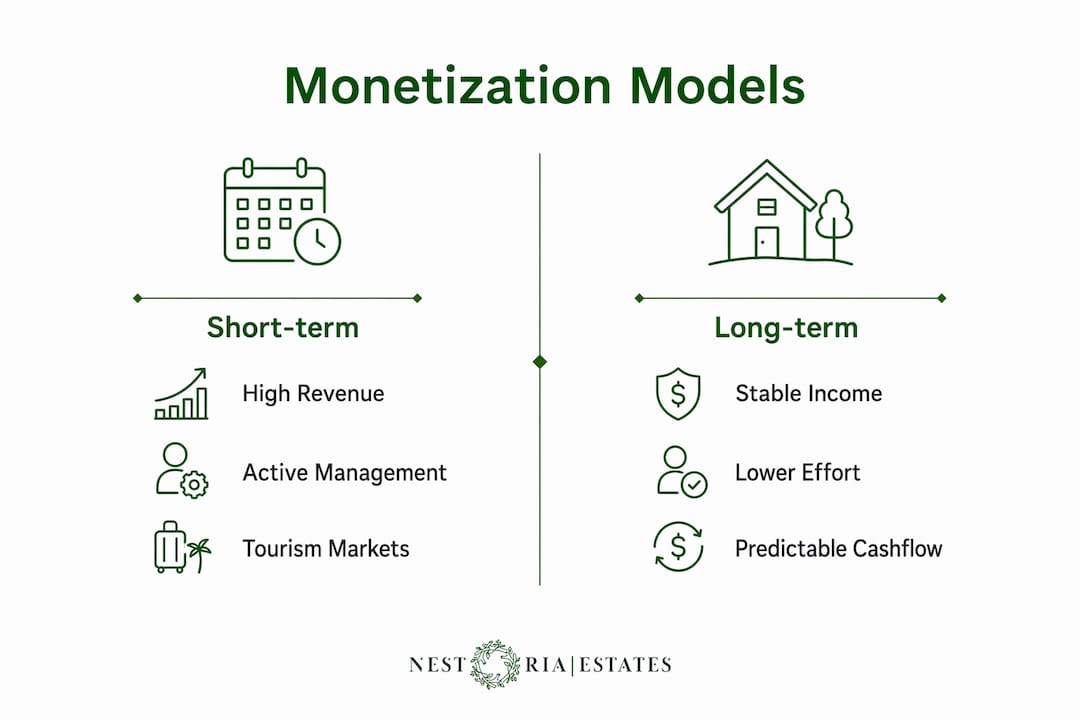
Three primary models define how owners generate income from high-end properties: short-term rentals, long-term leasing, and hybrid use.
Short-term rentals
Short-term rentals produce the highest gross revenue per night but require active management. Platforms like Airbnb connect luxury properties with high-net-worth travelers who expect hotel-grade presentation and personalized service. The operational load is real: pricing adjustments, guest communication, cleaning coordination, and maintenance all require consistent attention. Professional property management resolves this by handling every operational layer while the owner collects income.
Long-term leasing
Long-term leasing offers predictable monthly income with lower operational intensity. The trade-off is a significant revenue ceiling. Monthly rents for luxury properties rarely capture the premium that short-term nightly rates produce. Owners who prioritize stability over yield often choose this model, particularly for properties in markets with strict short-term rental regulations.
Hybrid models
Hybrid models let owners use their property personally during preferred periods while renting it out the rest of the year. This approach suits Vancouver owners who want both personal enjoyment and income generation. The key is scheduling: blocking personal use during low-demand periods and opening the property during peak seasons maximizes both experiences. You can read more about selecting luxury rentals as turnkey income assets to understand how to structure this effectively.
Model | Revenue potential | Operational intensity | Best for |
Short-term rental | Highest | High | Maximum income, managed professionally |
Long-term lease | Moderate | Low | Stability, minimal involvement |
Hybrid use | High | Medium | Personal use plus seasonal income |
Pro Tip: Luxury properties in tourism-heavy markets like Vancouver perform best as short-term rentals during summer and major event periods. Block your personal weeks in January and February when demand naturally softens.
What tax strategies and corporate structures optimize monetization?
Tax planning is where luxury real estate income streams either compound or erode. Canada’s tax code offers real advantages for rental property owners, but only when structured correctly.
Capital Cost Allowance (CCA). CCA allows owners to claim 4% annual depreciation on a declining balance, reducing taxable rental income each year. The catch is recapture: when you sell, the CRA claws back all depreciation claimed as income. Think of CCA as a tax-deferred loan, not a permanent saving. Use it when you plan to hold the property long-term or when current income is high enough to justify the future recapture risk.
HoldCo/OpCo structures. For owners with significant portfolios, separating the holding company (HoldCo) from the operating company (OpCo) reduces tax on active business income to 9–13% compared to personal rates of 15–31%. Setup costs run $3,000–$5,000, with annual maintenance of $2,000–$3,000. The structure pays for itself quickly at luxury rental income levels.
Income splitting. Distributing rental income to lower-earning family members through a properly structured corporation reduces the household’s overall tax burden. This requires legal setup and compliance with attribution rules.
Disposition timing. Selling a rental property in a year when your other income is lower reduces the tax hit on capital gains and CCA recapture. Timing the sale around retirement or a business exit is a common and legal strategy.
Effective tax planning is the single most overlooked lever for improving after-tax returns on luxury rental investments. Most owners focus on gross revenue and ignore the structural decisions that determine what they actually keep.
Pro Tip: Engage a Canadian tax accountant who specializes in real estate before your first rental booking. The cost of proper setup is a fraction of what poor structure costs over a five-year hold.
What market trends drive luxury real estate monetization in 2026?
The demand side of luxury rentals has shifted in ways that directly benefit property owners. High-net-worth individuals increasingly rent rather than buy to preserve portfolio liquidity, avoid foreign-buyer taxes, and sidestep the friction of cross-border property ownership. This is not a budget decision. It is a deliberate financial strategy by people who could afford to buy outright.
That behavioral shift creates a deep, well-funded renter pool for luxury properties. Owners who position their assets correctly capture guests paying premium rates for privacy, space, and amenities that no hotel can match. The private rental experience consistently outperforms hotels on space, kitchen access, and exclusivity, which is exactly what high-net-worth travelers prioritize.
Regional market dynamics matter too. The Canadian luxury market is shifting toward secondary cities including Calgary, Edmonton, and Ottawa, where buyers and renters seek value and lifestyle alongside privacy. Vancouver remains a top-tier market, but owners in emerging luxury corridors now have real monetization opportunities that did not exist three years ago.
The properties that succeed share three characteristics:
Turnkey readiness. Guests expect everything to work perfectly on arrival. No exceptions.
Supply-constrained locations. Waterfront, mountain view, and heritage properties cannot be replicated.
Documented compliance. Luxury rental success in 2026 depends on properties with clean licensing histories and compliant rental records.
“High-net-worth individuals are treating housing as a flexible expense rather than a fixed asset. They rent to stay liquid, avoid transaction friction, and maintain optionality. This is the structural demand that makes luxury rental properties so valuable to own right now.”
What operational best practices ensure profitable luxury rental management?
Operations determine whether a luxury rental property builds or destroys its own value. The income potential is real, but so is the wear factor.
Luxury renters hold properties to a hotel standard and complain loudly when that standard slips. High-use areas degrade faster under rental conditions. Kitchens, bathrooms, outdoor spaces, and mechanical systems all require more frequent inspection than a personal residence would. Build a maintenance schedule that treats the property as a commercial asset, not a home.
Key operational practices that protect both income and asset value:
Schedule professional deep cleans between every guest stay, not just surface cleans.
Conduct a formal property inspection every 30 days regardless of occupancy.
Use dynamic pricing tools that adjust nightly rates based on local demand, events, and seasonality.
Respond to guest inquiries within one hour. Response speed directly affects booking conversion and review scores.
Maintain a licensed, insured contractor network for same-day repairs.
Licensing compliance is non-negotiable. Non-compliant short-term rentals face denial of all expense deductions under 2024 CRA legislation, meaning owners pay tax on gross rental revenue with no offsets. That single risk can turn a profitable property into a financial liability overnight.
Pro Tip: Professional property management pays for itself at the luxury level. The benefits of professional management include higher occupancy, better reviews, and full compliance, all of which protect your asset and your income simultaneously.
What are the risks in monetizing luxury real estate, and how to mitigate them?
Every income strategy carries risk. Luxury rental monetization is no different, and the stakes are higher because the assets are worth more.
Regulatory risk. Municipal and provincial rules on short-term rentals change frequently. Vancouver has introduced licensing requirements that catch unprepared owners off guard. Register properly, renew annually, and monitor bylaw updates.
Asset wear and depreciation. Rental use accelerates physical deterioration. Budget 1–2% of property value annually for maintenance and capital repairs. Treat this as a cost of doing business, not an unexpected expense.
Market volatility. Luxury rental demand can soften during economic downturns or when new supply enters a market. Diversify your income by maintaining flexibility to shift between short-term and long-term rental models as conditions change.
Insurance gaps. Standard homeowner policies do not cover commercial rental activity. Obtain a dedicated short-term rental insurance policy that covers guest liability, property damage, and loss of income.
The short-term rental market in 2026 rewards owners who treat their properties as businesses. That means proper structure, proper insurance, and proper compliance from day one.
Key Takeaways
Monetizing luxury real estate generates the highest returns when owners combine compliant short-term rental operations, sound tax structures, and professional management from the start.
Point | Details |
Revenue advantage | Short-term rentals generate 2–3 times the gross revenue of long-term leases in prime Canadian markets. |
Tax structure matters | HoldCo/OpCo structures reduce active business income tax to 9–13%, versus personal rates of 15–31%. |
Demand is structural | High-net-worth renters choose flexibility over ownership, creating deep, sustained demand for luxury rentals. |
Compliance is mandatory | Non-compliant rentals lose all expense deductions under 2024 CRA rules, taxing owners on gross revenue. |
Operations protect value | Hotel-grade maintenance and professional management preserve asset value while sustaining rental income. |
Vancouver luxury rentals: what I’ve learned after years in this market
I’ve watched Vancouver property owners make the same mistake repeatedly. They treat monetization as a passive decision, list the property, set a price, and assume the income follows. It does not work that way at the luxury level.
The owners who generate consistent, high returns treat their properties as operating businesses from the first booking. They invest in presentation, maintain compliance, and use professional management to protect both the asset and the guest experience. The ones who cut corners on maintenance or skip proper licensing end up with negative reviews, CRA problems, or both.
What surprises most investors is how much the tax structure matters. I’ve seen owners earning strong gross revenue who kept very little after tax because they held the property in the wrong structure. Getting the HoldCo/OpCo setup right before you start renting is worth far more than any single booking.
The other underrated factor is flexibility. Luxury renters want properties that feel effortless to book and perfect on arrival. If your operations cannot deliver that consistently, you will lose repeat bookings and referrals, which are the real drivers of luxury rental income over time. The short-term rental model works exceptionally well for luxury properties in Vancouver when it is run with the same discipline you would apply to any serious business.
— Kamran
How Nestoriaestates supports Vancouver luxury property owners
Nestoriaestates specializes in full-service luxury rental management for Vancouver property owners who want income without the operational burden. From pricing optimization and guest communication to cleaning coordination and compliance monitoring, Nestoriaestates handles every layer of the rental operation.
The team uses market-based pricing adjustments and detailed owner reporting to keep your property performing at its peak. If you own a luxury property in Vancouver and want to understand its income potential, Nestoriaestates offers free revenue projections with no commitment required. Explore the full range of luxury management services and see exactly how a professionally managed property compares to what you are earning now.
FAQ
Why monetize luxury real estate instead of leaving it vacant?
Vacant luxury properties still carry full ownership costs including taxes, insurance, and maintenance. Monetizing through short-term rentals converts those fixed costs into deductible business expenses while generating income that can significantly exceed carrying costs.
What occupancy rate can I expect for a luxury short-term rental in Vancouver?
Short-term rentals in prime Canadian markets averaged approximately 64% occupancy in early 2026. Vancouver waterfront and view properties typically perform at or above that rate during peak seasons.
Is a HoldCo/OpCo structure worth it for a single luxury property?
For a single property, the structure adds cost without proportional benefit. HoldCo/OpCo setups make financial sense when active rental income is high enough that the tax reduction from 15–31% down to 9–13% exceeds the $5,000–$8,000 annual setup and maintenance cost.
What happens if my short-term rental is not properly licensed?
Under 2024 CRA legislation, non-compliant short-term rentals lose all expense deductions. The CRA taxes owners on gross rental revenue, which can turn a cash-positive property into a significant tax liability.
How does professional property management improve luxury rental returns?
Professional management raises occupancy through faster response times, dynamic pricing, and consistent guest experience. It also reduces costly maintenance surprises through regular inspections, protecting both income and long-term asset value.
Recommended
Comments